 Interview
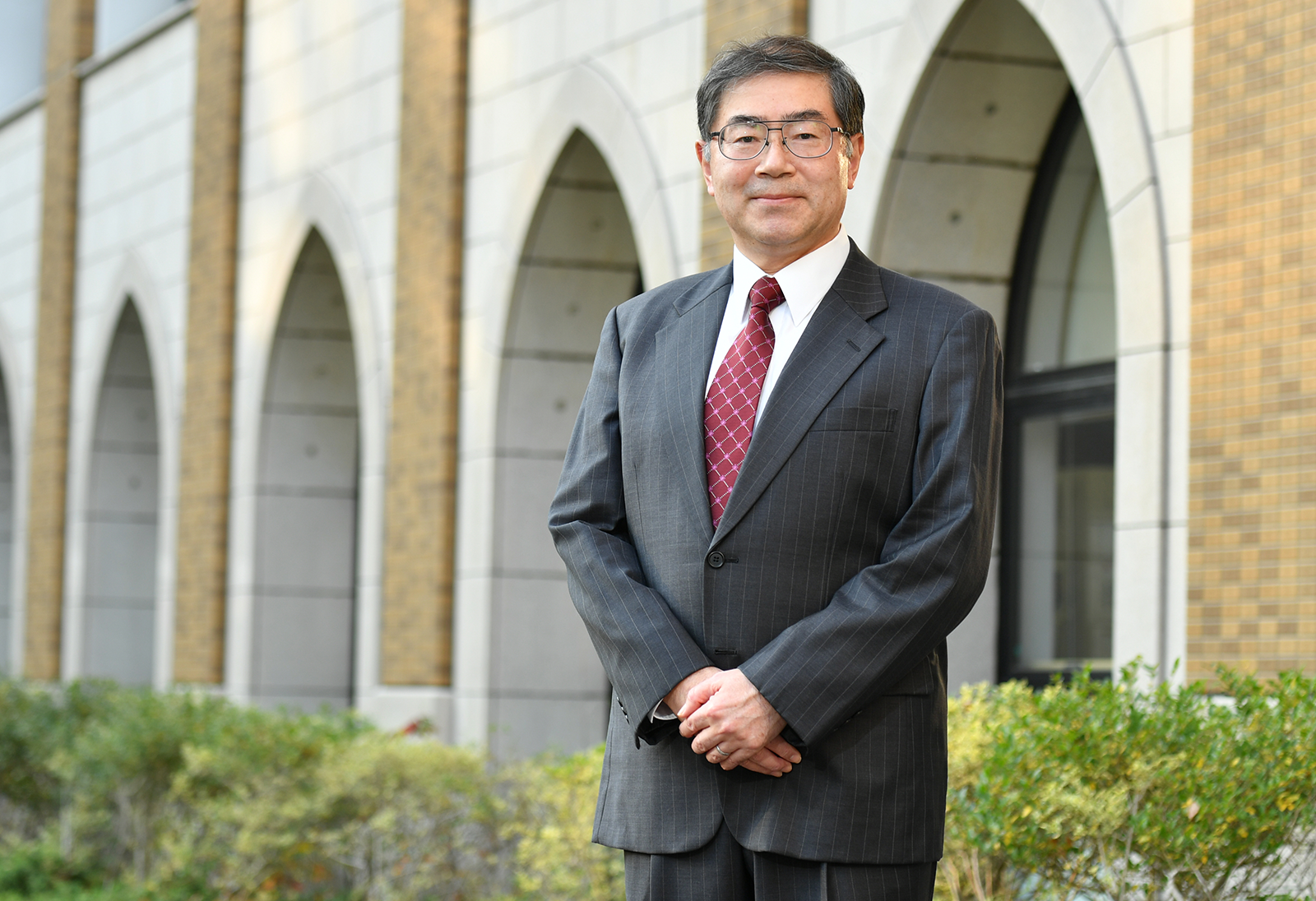
Professor Shinsuke Kambe
- Research Fields
- Microeconomics (Game Theory, Negotiation, Organisation)
- Profile
- Graduated from Faculty of Economics, the University of Tokyo in 1987. Entered Graduate School of Economics, the University of Tokyo. Studied abroad at Graduate School of Business, Stanford University from 1989, earning his PhD in 1993. Junior Research Fellow at Nuffield College, the University of Oxford during 1993-1995. Joined Faculty of Economics, Gakushuin University in 1995. Professor since 1999.

Understanding Human Relationships through Applied Mathematics: A Game Theorist Discusses Logical Thinking
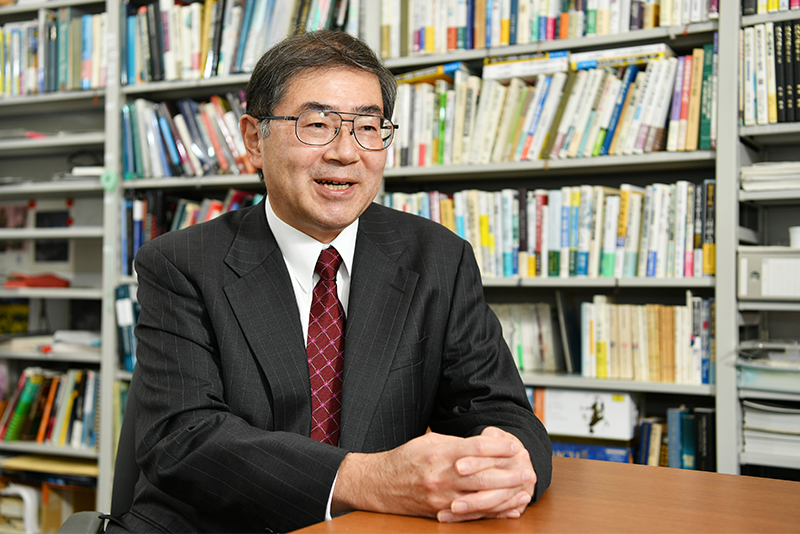
Understanding the ‘strategy’ in human relationships by way of mathematical models
When most people think about economics, they probably think of analysing numbers, such as stock price fluctuations, GDP trends or corporate financial data. Indeed, many modern economists work on empirical economics, which statistically processes massive amounts of data.
However, Professor Shinsuke Kambe’s approach is somewhat different. His speciality is not the analysis of data, but is ‘theoretical economics’, which uses mathematical formulas to understand social and human relationships, more specifically a field known as ‘game theory’.
“In my lectures and research, concrete numbers are rarely used. All that are written on blackboards are variables such as ‘x’ and ‘y’. This is because what I want to clarify is not how much a particular company’s profits have increased or like, but is rather the mechanisms by which the world operates; that is, the logical structure (or mechanism) behind it.
“Of course, data are important for understanding reality. However, if you don’t comprehend the underlying causes that explain why things happen in the first place, you won’t reach fundamental understanding. Abstracting causal relationships between things and building mathematical models is the role of theoretical economics.”
Classical economics, as advocated by Adam Smith, was based on the idea that market price adjustments match supply and demand. However, real economic activity is far more complex and human. Direct transactions such as competition between companies, human resource management, contract negotiations with subcontractors and other are ubiquitous in the business world. In these situations, there is always bargaining between people.
Game theory focuses on these relationships. Proposed in the 1930s by mathematician Von Neumann and economist Oskar Morgenstern, the theory initially developed in the military and engineering spheres. It began to be applied to economics in the 1970s and 1980s and became established as a tool for analysing corporate strategic behaviour and the design of incentives within organisations.
“In real-world business, not everything is determined simply by market price. Salespeople negotiate with other companies, finalise terms and reach an agreement. There is always strategic interdependence involved. I teach my graduate students how to apply this theory. By using not only specific industry knowledge but also abstract theory as a tool to acquire a framework for logically interpreting what’s happening in the real economy, my students develop a perspective that can be applied to any business or transaction.”
Professor Kambe is particularly interested in the ‘economics of information’, a branch of game theory whose real-world implication he encourages his students to explore. This field deals with information asymmetry, that is, situations where one party has relevant information but the other does not.
For example, consider a case where a company orders parts from a subcontractor. The parent company wants the subcontractor to “work hard to produce a high-quality product using its advanced technology”. However, the parent company does not have complete information about the technological capability possessed by the subcontractor, nor does it know how seriously the subcontractor is working to reduce costs at its factory. This is where information asymmetry comes about.
How can you motivate other parties and achieve high-quality production at a reasonable cost when you can’t read their minds? Simply telling them to “Do your best” won’t motivate them. This is why it is necessary to build trust through transacting over the long-term, or to devise contractual arrangements such as the control rights over blueprints.
“With machines, you just flip a switch and they start working, but that’s not the case with humans. How do you make a deal successful when you can’t see whether the other party is slacking or working hard? There’s a sophisticated level of bargaining involved. Even complex behaviour that at first glance appears to depend on human emotion and psychology can be explained by working out the flow of information and the structure of incentives. The most fascinating part of this field is when the black boxes of the world are logically deciphered.”
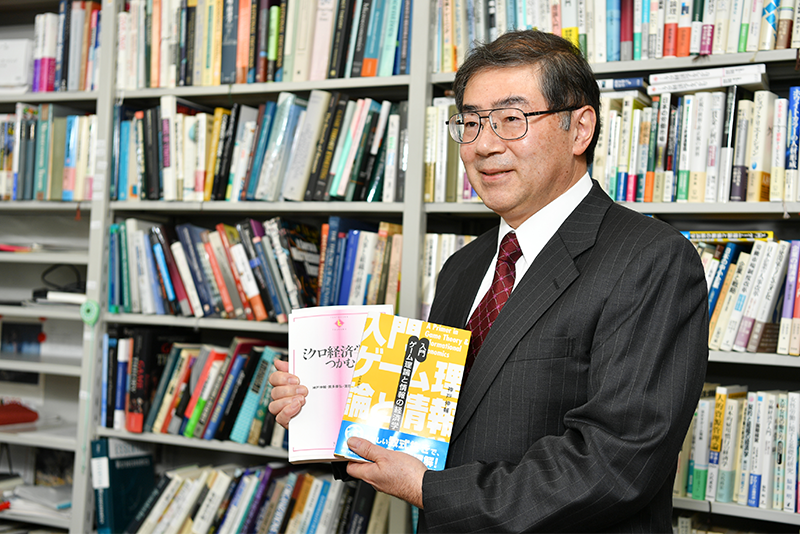
From physics to economics: Studying abroad in search of groundbreaking knowledge
Game theory has now been established as a common language in economics, but it had limited presence in Japan when Professor Kambe decided to pursue a career in research in the 1980s.
Professor Kambe’s academic beginnings were, surprisingly, in physics. When he first entered the University of Tokyo, he enrolled in Natural Sciences I of the College of Arts and Sciences, aspiring to become a physicist. The turning point came when he discovered that mathematical methods were beginning to be introduced into the world of economics.
“I’ve always loved mathematics and was drawn to using mathematical formulas to understand the laws of nature. However, I learned that there was a field in which even complex human relationships and social dynamics could be described and analysed mathematically. What’s more, while physics had become somewhat systematised, there were still many unknowns in economics. As a science-orientated person, I would rather do research that involves mathematical analysis than reading history books, so I instinctively thought that this would be interesting and decided to switch to the Faculty of Economics. At the time, game theory was just beginning to be fully introduced into economics, and I felt a sense of excitement, as if an unexplored wilderness was spreading out in front of me.”
At the time, there were few professors specialising in game theory at Japanese universities, to the extent that graduate students at Tokyo Institute of Technology and Keio University together with those at the University of Tokyo were holding study groups of their own to share information. Wanting to gain exposure to more groundbreaking research, Professor Kambe completed his master’s degree and decided to study abroad at Stanford University in the United States, which was and is the world’s leading centre for game theory research. What he encountered there was a research environment on a completely different level to that in Japan.
“The late 1980s and 1990s were a turbulent time for economics, when it was undergoing major change. Phenomena that could not be fully explained by pre-existing theories were being constantly re-examined using game theory, and new fields such as ‘new industrial organisation theory’ were born.
“The environment at Stanford was great. First of all, its financial pulling-power was unmatched. Excellent professors were recruited from all over the world, and graduate students were provided with ample living expenses and scholarships, allowing them to devote themselves to their research without financial worries. I was enrolled in a doctoral programme at the business school, and there were only a limited number of students. Because the class size was small, I was able to participate in research projects led by renowned professors, and I learned how to behave as a researcher, much as if I were undertaking an apprenticeship.”
This ‘enthusiastic atmosphere’ and ‘immersive environment’ formed the backbone of Professor Kambe’s career as a researcher. After returning to Japan, he accepted an invitation from Professor Jun Wako, with whom he had previously researched game theory, to take up a position at Gakushuin University. Together with Professor Wako, Professor Kambe was one of the first to introduce game theory - which was still rare in Japan - as a regular undergraduate course. Gakushuin University’s pioneering adoption of new theories ahead of other universities was due to its faculty network and its enterprising spirit of incorporating innovative ideas.
Nearly 30 years have passed since then, and what were once viewed as ‘new theories’ have been accepted as standard in economics, with Professor Kambe continuing to play a key role in their dissemination and development.
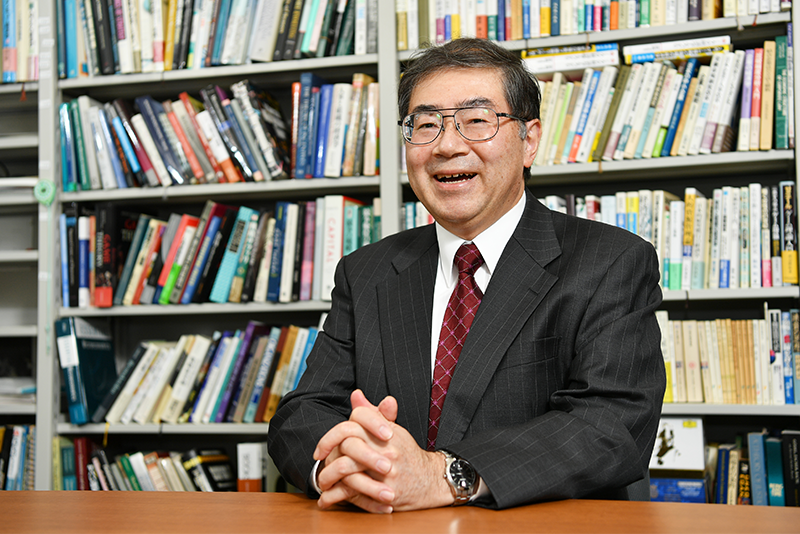
Small classes lead to intensive tutoring and discussion
Professor Kambe, who has taught at Gakushuin University for many years and has observed research and education there first hand, believes the greatest appeal of its graduate school lies in its combination of ‘high-quality faculty staff’ and ‘small-class education’. Gakushuin University has a tradition dating back to its days as a higher school under the old system, which was established by the government, and has been regarded among academic circles as having outstanding researchers. In fact, if you go to the economics section of a large bookstore, you will find many textbooks written by Gakushuin faculty members alongside those written by professors from top national universities like the University of Tokyo, Hitotsubashi University and Osaka University. It validates the high quality of the faculty members. At the same time, the number of graduate students is smaller than at larger universities. Professor Kambe emphasizes that this learning environment is extremely advantageous for graduate students.
“Even though we have a faculty of such high calibre – and I may be a little biased in saying so - there are years when there are only one or two graduate students per professor, or even none at all. This is an environment that would be hard to imagine at other universities. At mammoth universities, many students are assigned to a single renowned professor, with limited opportunities for direct learning. But, at Gakushuin, you have top-level researchers all to yourself and can receive guidance that is close to one-on-one. I think this is a truly luxurious environment.”
Graduate school education differs significantly between the master’s and doctoral programmes. The doctoral course is where students who already have a solid foundation as researchers can complete their own research. Here, faculty members engage in discussions from a position closer to that of a co-researcher than that of an instructor. The master’s course, on the other hand, is a training ground for students to become proficient in using the tools of economics. Professor Kambe opens his doors not only to students who aspire to become researchers, but also to working professionals and undergraduate students who wish to put their advanced specialised knowledge to use in the real world.
“In my workshop, the goal isn’t necessarily to help students become professional academics. Rather, we expect them to acquire the logical thinking tools of economics and develop the ability to use them to solve social problems. My speciality, theoretical economics, is characterised by its broad range of applicability, thanks to its high level of abstraction. For example, let’s say you read a textbook and you understand the theoretical framework that ‘information asymmetry impedes transactions’. You can then apply this to real-world situations, asking questions like, ‘How does this work in actual M&A transactions?’ or ‘How does it apply to our company’s staff evaluation system?’ By going through this process of gathering real-world data and testing it against the theories presented in the class, students acquire universal analytical skills that can be applied in any business setting.”
Economics, especially its theoretical aspects, is a discipline in which the more you study, the greater your understanding of the world becomes. By using theory to filter the news and corporate activities you see every day, you can gain clearer understanding of why things are the way they are and what kind of negotiations are at work, and between whom. Gakushuin offers an environment that fully supports this intellectual spirit of inquiry.
“Because we have a small student population, we are able to provide flexible instruction tailored to each student’s interests. If you have any questions, please feel free to knock on the door of the office and come in for a chat. We look forward to welcoming visitors who are passionate about exploring knowledge.”
| Date of interview: | 28 Nobember 2025 |
| Interviewer/writer: | Hiroyuki Tezuka |
Positions and affiliations reflect information at the time of the interview.
Date of interview: 28 Nobember 2025 / Interviewer/writer: Hiroyuki Tezuka
Positions and affiliations reflect information at the time of the interview.