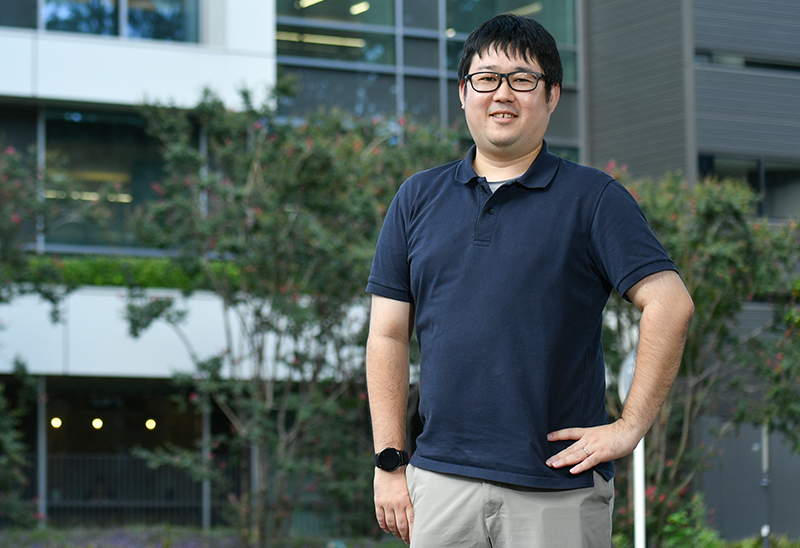
 Interview
- Profile
- Graduated from Yokohama National University Faculty of Economics in 2013. Completed master’s degree in economics at Hitotsubashi University Graduate School in 2015. Graduated from doctoral programme at University of Tokyo Graduate School of Economics in 2018. Received PhD in Economics from University of Tokyo Graduate School in 2021. Appointed Research Fellow at University of Tokyo Graduate School of Economics in 2018. Appointed Research Fellow at Economic and Social Research Institute, Cabinet Office, Japan in 2020. Appointed Assistant Professor at University of Tsukuba Faculty of Humanities and Social Sciences in 2022. Appointed to current position in 2024.

Exploring the Future of Work and the Family Through Labour Economics
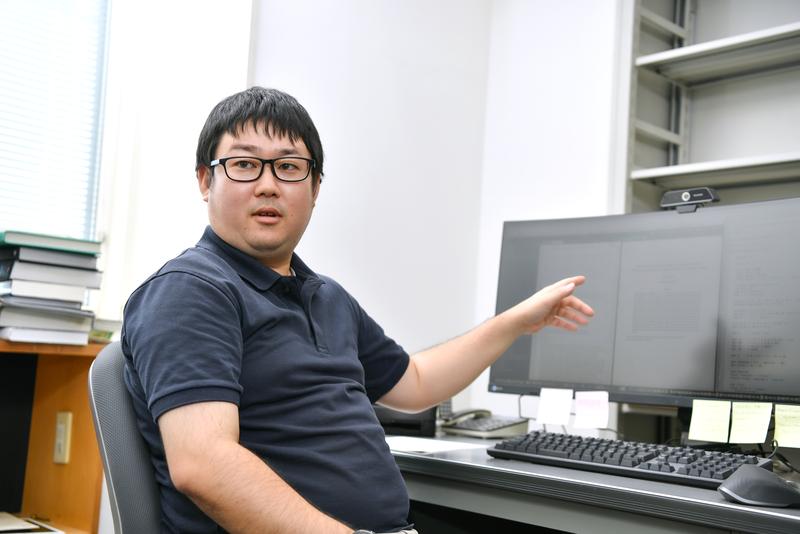
“It’s frightening not to understand how the world works”: A longing for independence as the starting point for his gaining a perspective on society
“Economics is a discipline that considers how to allocate existing resources to enrich society. When we think about it that way, the question of how to allocate our most fundamental resource -- time -- inevitably leads to the question of labour. In that sense, labour economics is a very traditional field."
Professor Taiyo Fukai’s speciality, labour economics, is a classic and far-reaching field that delves into human activity itself. On first impression, economics tends to be seen as a lifeless discipline that pursues only rationality. Professor Fukai highlights how rationality is perceived in labour economics.
"The fundamental principle of economics is that people make decisions in pursuit of happiness. We think about what choice is most rational to make for us to be happy. Even actions that may seem to be irrational behaviour can in fact turn out be the most rational choice for a person who has taken into account certain factors we are not aware of. Understanding what lies behind these decisions is part of what makes economics fun.”
The root of Professor Fukai’s research is a desire to “understand the structure of the world” and a passion to “give back to society”. Its origins stem from the time he decided to enter university after finishing high school, where he had dedicated himself to track and field.
“I devoted myself to track and field in high school, so decided to study hard at university. At the time, I had a vague goal in mind: ‘I want to give back to society’. I was fortunate to have been raised in a comfortable and happy environment until I was 20 years old, but I don’t take that for granted; I feel extremely lucky.
“The neighbourhood where I grew up was home to a variety of households: nuclear families, three-generation households, self-employed families, high-rise apartment buildings, people living in company dormitories or public housing, and people from overseas. As I interacted with different kinds of people, there were times when reality hit me. Growing up in surroundings that had allowed me to live a comfortable life, I felt a strong desire to pass on the kindness I had received to the next generation, and to society as a whole.”
On reaching adulthood, individuals are compelled to assume responsibilities as integral members of society. And this sense of obligation developed in Professor Fukai in a similarly natural manner. He was aware, however, that he first had to face two major challenges if he wanted to achieve his big goal.
“Because I was raised with a lot of love and care from a young age, I was constantly worried I might grow up to be an adult who couldn’t do anything on my own. I didn’t know how to build relationships or how to be independent. These two factors prompted a major concern for me: ‘I don’t understand how the world works’. And I began to become interested in the economy, which shapes people’s lives.”
Although he had a noble goal of giving something back to society, his foothold was shaky: he lacked even the basic ability to manage everyday life, he didn’t know how to interact with others, and he didn’t know how to make a living. If he continued like this, he wouldn’t be able to contribute to society, let alone survive as a human being. This intense sense of crisis was the driving force behind Professor Fukai’s motivation.
“The information gap I felt in my hometown of Nagoya was huge. Every time I turned on the television, all I heard was talk of Tokyo. Even if people were telling me what was popular in Shibuya or what had opened up in Shinjuku, I had no idea what they were talking about. I hated that. So I thought about attending university in the Tokyo metropolitan area to learn about what was happening at the centre of the world.”
And so began his quest to become independent. He joined a club to learn about human relationships and began living on his own. His days were filled with excitement of the like he could never have experienced back home. This backdrop became the catalyst for Professor Fukai to discover a new set of values in his life.
After completing his Master’s in Economics at Hitotsubashi University Graduate School, Professor Fukai thought he would pursue a career in the private sector. However, during an internship, he began to feel a certain disconnect between his dreams and his goals. At that time, his supervisor at the master’s course suggested to him, “Why don’t you come and try a doctoral programme?” He admits to having been “naturally hesitant” about an option he hadn’t previously contemplated. However, it was his own formative experience that gave him the push he needed.
“Although I had left home to live independently, I always maintained a sense of trust in my family, relatives and friends. I think that’s what allowed me to take a leap into doctoral studies, because I believed I had a place to return to if I failed. This sense of having a safety net was extremely important to me, and it’s something that remains connected to my current research theme.”
It was this awareness of the importance of having support that led Professor Fukai to the research he now pursues: exploring a society where people are encouraged to take risks and embrace challenges.
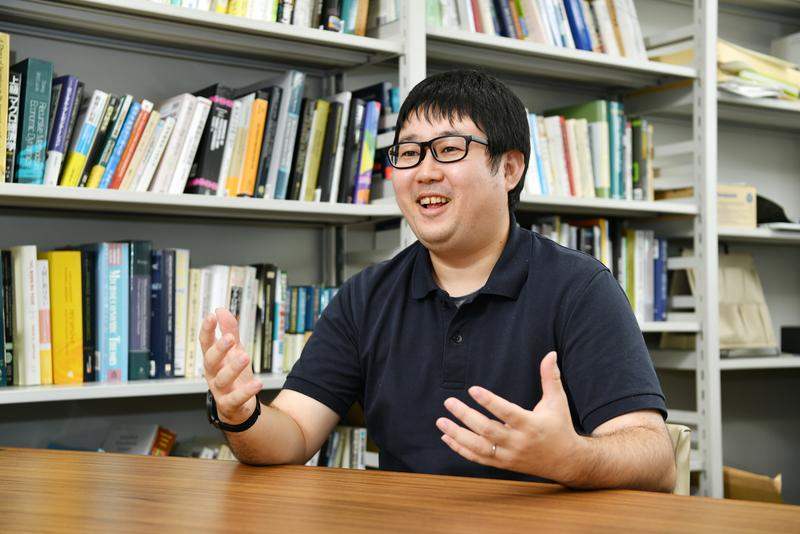
Encounters with three mentors paved the way toward labour economics and an understanding of the structure of society
Professor Fukai’s university life, which began with a desire to “learn about the world”, unexpectedly led him down the path of serious research. His fate was determined by three mentors he met along the way.
The first major juncture came when he met Professor Daiji Kawaguchi (currently a professor at the University of Tokyo), who pointed him in the direction of a doctoral programme. Once he’d set out on this journey, he was able to perceive academia as a completely different world.
“The high quality of the students around me, the calibre of our discussions: everything was different. All at once, standards were raised in the new world I was observing, and it felt as if something inside me had been released.”
The experience was the starting point for him to break new ground as a researcher.
His next significant encounter came during the admission interview for his doctoral programme. The interviewer – who was to become his second mentor - posed a question that could only be answered by someone who had been trained to constantly monitor society and consider it from an economic perspective. He left the interview unable to answer it, but it was a powerful experience that made him realise the importance of being able to apply economic insight to all aspects of society, not just to his own field of expertise.
And then, just as Professor Fukai felt unsure of which path to take, a third mentor gently provided encouragement. One route into the world of economics at the time was to earn a PhD at a graduate school in the United States, something that Professor Fukai was considering. However, he just couldn’t let go of his desire to “study Japan and contribute to Japan”, and he agonised for nearly a year over which direction to take. The professor, who was always there to offer advice and sympathy, gave him a push by saying, “In the end, just go for it!”
“I felt a sudden sense of relief. Even a professor I respected so much would ultimately have to make up his mind about taking such a leap. That one kind sentence of his convinced me, and I stiffened my resolve to pursue my career as a researcher in Japan.”
And so, Professor Fukai made the leap and began his journey as a researcher.
His interest also extends to complex issues facing modern society, such as the gender wage gap.
“In place of the gender discrimination of the past, attention in recent years has shifted toward issues such as ‘statistical discrimination’ and the ‘child penalty’, which refers to the disadvantages of having children. However, correcting observed wage disparities does not necessarily l make everyone better off. If an individual wishes to spend more time at home, that is a choice that should be respected. However, if someone truly wants to continue working but is being disadvantaged by social structures, that may be a social problem that ought to be addressed. Is the situation that person finds themselves in a ‘punishment’ or a ‘choice’? The fascinating thing about this field of study is that it allows us to delve into such issues.”
In analysing these social issues, labour economics offers a dynamic perspective that helps us evaluate t how changes in laws and institutions affect people’s behaviour.
“A key feature of labour economics is that knowledge of economics and statistics alone is not enough. You need to understand the laws and systems by which people live in the real world and what happens when those systems change.”
One example is Professor Fukai’s long-standing research into child daycare centres. How much impact does the development of daycare centres, which began in earnest around 1995, have on the current birth rate compared to a counterfactual world in which it had never been implemented? His research shows that the development of daycare centres has had the effect of raising the total fertility rate by approximately 0.1. For a class of 30 students, this would be the equivalent of preventing a loss of three classmates. Constantly keeping an eye on social trends and continually facing reality is essential to this field of study.
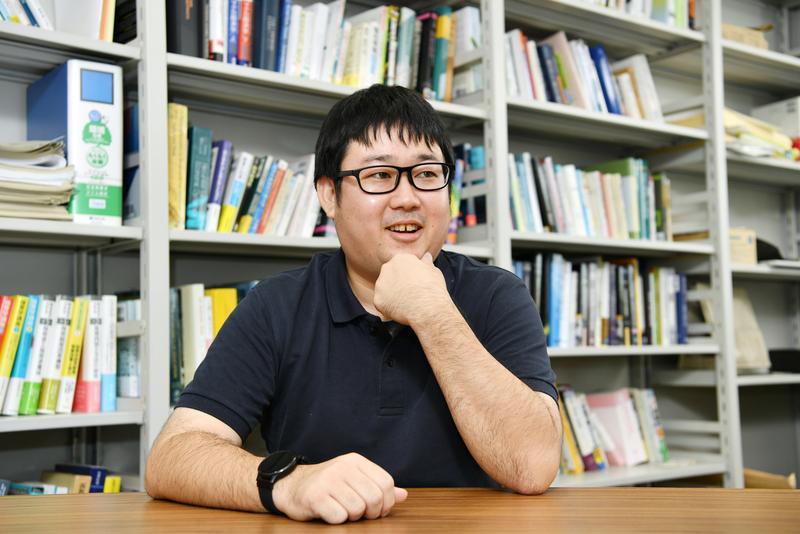
Unlocking your potential at Gakushuin: the distinctive value of a smaller graduate school
As he continues to advance his career as a researcher, Professor Fukai now teaches at Gakushuin University, and has a passion for nurturing the next generation of students. In his eyes, his students seem to be “very earnest, but underrate their own abilities”.
“I design my lectures based on textbooks and content that are standards of international learning. Even so, my students understand the material without any problems and score well on tests. They have the skills to do so. I hope that at some point I can convey the message to them: ‘You just need to have more confidence and take on new challenges’.”
What is the value of studying at Gakushuin University Graduate School? Professor Fukai points to the “quality of the faculty” and the “environment that supports students”. He says the university nurtures students’ passion for learning and boasts many highly accomplished faculty members who are passionate about education and who continue to conduct groundbreaking research.
While large graduate schools have the appeal of allowing students to work closely with a diverse student body, Professor Fukai says the unique value of teaching at Gakushuin lies in the opportunity to spend time with each individual student.
“The greatest strength of Gakushuin University Graduate School is the availability of highly qualified faculty staff who provide one-on-one guidance to each student through close communication. It’s hard to find a large university that can offer an environment where you can receive near-one-on-one guidance from professors conducting frontier research both in Japan and abroad. I think it’s great for those who want to steadily acquire research skills along with the ability to understand the world, at their own pace and without being influenced by others around them.
"If you want to take the time to think carefully about the issues you face in your own life and in society, or if you want to train yourself to be able to see things logically, then graduate school can be an extremely meaningful place for you. Gakushuin, in particular, is a place where you can explore your potential through close interaction with faculty staff. If you wish to find your own answers to the social issues in front of you, we will do our utmost to support you in your quest. I look forward to the day when I can study here with you, with your passion for entering the world of academia.”
| Date of interview: | 2 October 2024 |
| Interviewer/writer: | Hiroyuki Tezuka |
Positions and affiliations reflect information at the time of the interview.
Date of interview: 2 October 2024 / Interviewer/writer: Hiroyuki Tezuka
Positions and affiliations reflect information at the time of the interview.