 Interview
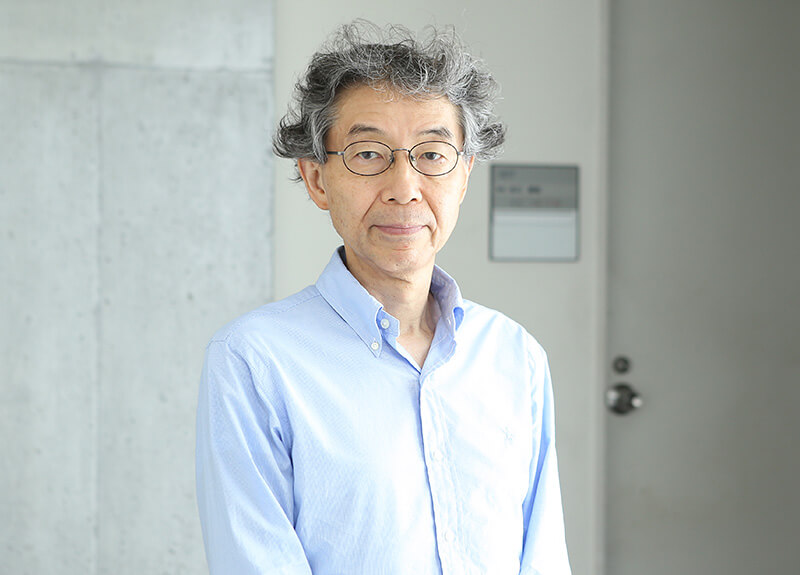
Professor Akira Takeishi
- Research Fields
- Business Strategy, Business Organisation and Technology Management
- Profile
- Graduated from the University of Tokyo Department of International Relations, College of Arts and Sciences, in 1982. Completed master’s degree at Massachusetts Institute of Technology’s Sloan School of Management in 1990 and earned PhD at the Massachusetts Institute of Technology’s Sloan School of Management in 1998. Worked as a researcher at Mitsubishi Research Institute, Inc. from 1982-1994. Served as associate professor and professor at the Hitotsubashi University Institute of Innovation Research from 1998-2008, and as professor at Kyoto University Graduate School of Economics from 2008-2020, before assuming current position in 2020. Visiting researcher at École Nationale des Hautes Études en Sciences Sociales (EHESS) in France from 2015-2016. His many publications include Introduction to Business Management (2021), Reasons for Innovation: Creating Legitimacy for Resource Mobilization (co-authored, 2012), The Division of Labour and Competition: Outsourcing Management for Competitive Advantage (2003), and Business Architecture: Strategic Design of Products, Organizations, and Processes (co-edited, 2001).

The Joy of Research is Awaiting Us, Just Around the Corner
I discovered the joy of research and went to graduate school with the aim of writing a thesis
“At first, I found it difficult to understand why people want to go to graduate school.”
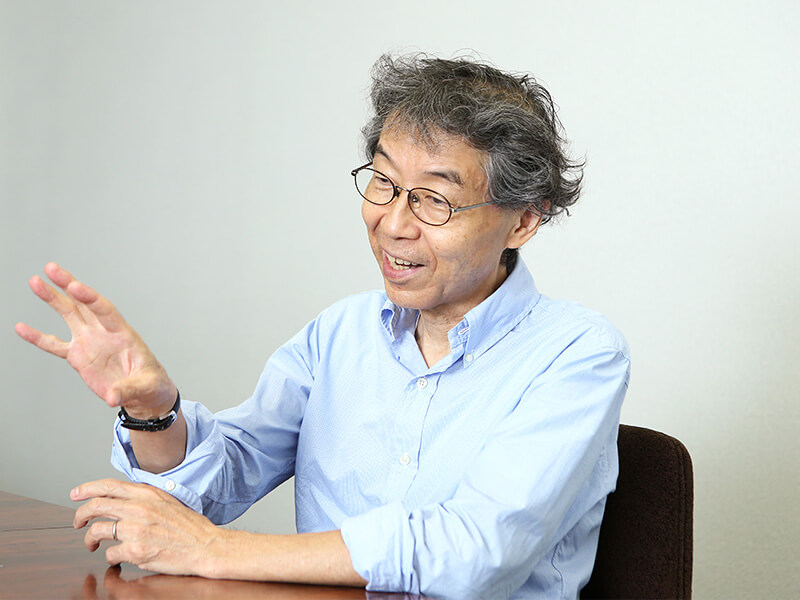
Looking back on his undergraduate days, Professor Takeishi smiles wryly. He devoted four years to playing tennis and performing rock music in a band. He repeated a year, leaving only his thesis to be written, which he somehow managed to complete. Then, when it came to job hunting, he had no idea where he wanted to work.
One day, a recruitment notice advertising for a new employee was posted by Mitsubishi Research Institute, Inc (MRI) on campus. For some reason, he felt intrigued, applied, and received a job offer. At the time, MRI had only been in business for about ten years. It was a small company of fewer than 500 employees and with a cumulative deficit. The young Professor Takeishi was assigned to the section for Industrial Economics Research as a researcher.
“I thought a job that involved research and writing might be interesting, but that feeling only occurred to me after I got the job; I hadn’t really thought about it that much before then.”
Unsurprisingly, after joining MRI, Professor Takeishi struggled at work. Everyone who joined the company seriously wanted to conduct decent research; they had all studied diligently in their student days.
Nevertheless, he was blessed with great superiors and colleagues (many of whom later became university professors), and, through hard work and dedication, he gradually became a research professional. With each new project he took on, his interest in research grew.
The turning point came when he decided to study abroad. At the time, an increasing number of Japanese companies were sending their employees on MBA (Master of Business Administration) courses at top American business schools. MRI also established an overseas study programme. Professor Takeishi took the company’s internal selection exam and passed.
While he had received acceptance letters from Columbia University and the University of California, he chose the Massachusetts Institute of Technology (MIT).
“One reason I chose MIT was that, unlike other business schools, a master’s thesis was required to graduate. While earning an MBA was important, I also wanted to try writing a thesis.”
Previously he happened upon a copy of John Krafcik’s master’s thesis submitted to MIT, and he was left awestruck. The thesis revealed the superiority of the production system developed by Toyota and other Japanese automakers. Professor Takeishi, who was working on a similar project at MRI, was astonished by the quality of the thesis.
“I found the idea of writing a good thesis extremely appealing.”
At MIT, he asked Professor Michael Cusumano, who was Krafcik’s thesis supervisor, to supervise his master’s thesis. From Professor Cusumano, he learned not only the fundamentals of writing a thesis, but also the importance of always being honest about research, data and results.
Research for the thesis was surprisingly enjoyable. With single-minded focus, he wrote a thesis which won the top master’s thesis prize in the MIT MBA course of 1990. Professor Cusumano then invited him to join the doctoral programme. This was the suggestion that set Professor Takeishi on the path to becoming an academic researcher. After studying at MIT, he returned to MRI and worked there for four years, before quitting his job, heading to MIT again and enrolling in the doctoral programme.
Incidentally, that master’s thesis - co-authored with Professor Cusumano - was submitted to and accepted by the Strategic Management Journal, one of the most highly ranked journals in the field of strategy research. It is by no means an outdated work; if you take a look at Google Scholar, it shows that the thesis continues to be cited today.
How do you explain things and persuade them to collaborate with you?
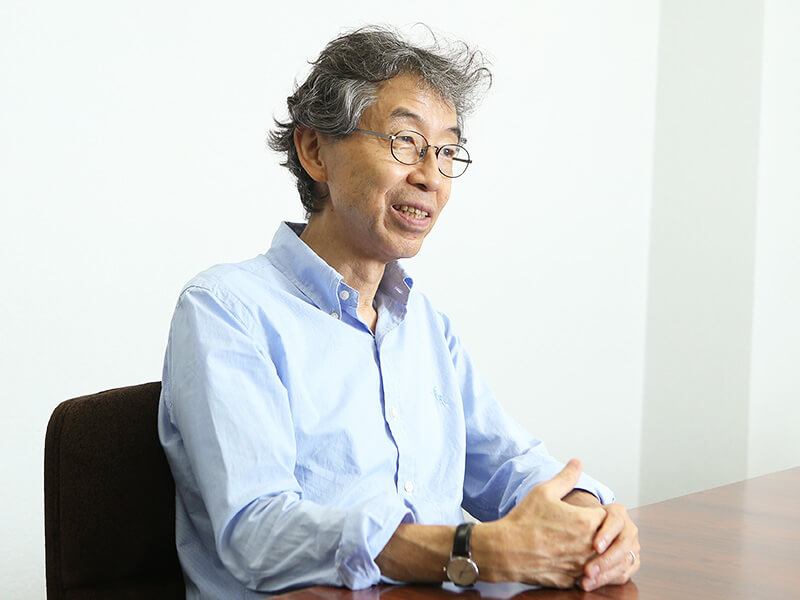
One of the research themes that Professor Takeishi has been exploring for some time is ‘Managing the Division of Labour Between Companies in the Automotive Industry’, which was the theme of his earlier master’s thesis and subsequent doctoral dissertation.
“Automakers and parts suppliers work together to develop and produce cars. Simply put, my research focuses on how to effectively manage this division of labour.
“In particular, how can automakers effectively manage the division of labour with suppliers? How can they manage relationships and the process with suppliers to achieve better results? That’s one of my research themes. This is an issue I’ve been interested in since my time at MRI, and I’m still working on it, albeit in a small way.
“And the second theme is innovation. When I returned to Japan after earning my PhD from MIT, I got a job at Hitotsubashi University’s Institute of Innovation Research. It’s a research institute that focuses on innovation as the name suggests, and I began to be fully engaged in innovation research there.”
What is innovation? “Ideas and technology are not in themselves innovation,” says Professor Takeishi.
“When it comes to something that a company is involved in, it can only be called innovation when it’s commercialised, purchased by people and profits are derived from it. Conversely, innovation is about social change, so for a company to be involved to change society, it must be viable as a business. In this regard, a key to achieving innovation is resource mobilisation.
“Anyone can come up with an innovative idea, But, no matter what the idea is, it will be without precedent, so no-one knows whether it might succeed. It’s extremely difficult to allocate people, materials and money - in other words, to mobilise corporate resources - to this ‘unknown thing’, and most ideas end up stalling at this point.
“In a capitalist society, resources move dynamically toward profit. It’s easy to mobilise resources when everyone believes something will be profitable, but how do you explain something that’s ‘uncertain’, and then get someone to accept it and collaborate with you? Unless you can do this effectively, innovation won’t happen.
“Possessing the creativity to innovate is of course essential for generating new ideas, but it is also essential for overcoming obstacles that stand in the way of mobilising resources. How can this be achieved? This was the theme of research I conducted at Hitotsubashi University’s Institute of Innovation Research.”
Papers should be strong, sincere and beautiful
In April 2021, Hakuto Shobo published How to Write a High-Quality Research Article: The Shape of Your Article Seen from Diverse Perspectives, edited by Yaichi Aoshima. It is a collection of essays by 11 established researchers, with Professor Takeishi also contributing.
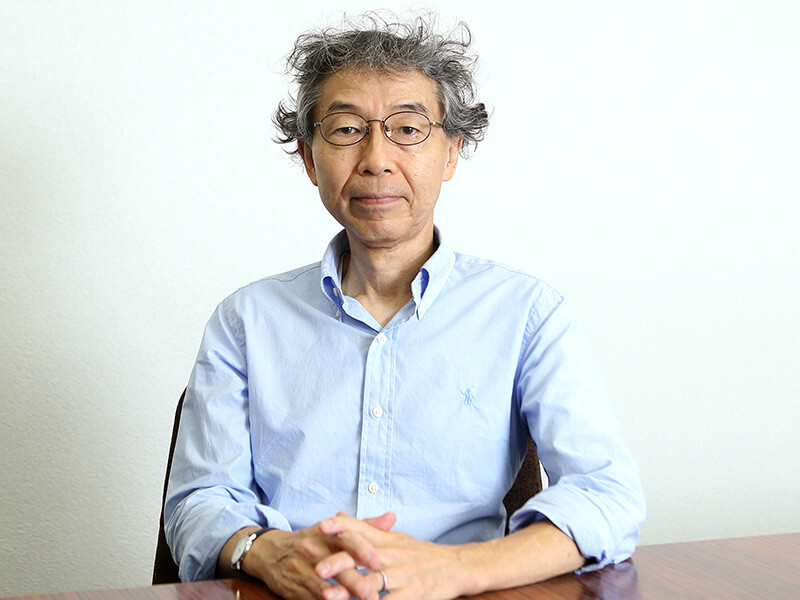
“What makes a high-quality research article? There are many ways to define it, but I chose the criteria of ‘strong, sincere and beautiful’. The words ‘strong’ and ‘sincere’ are especially important.”
“In the social sciences, there are always competing theories. I’m heavily influenced by sociologist Max Weber, who said, ‘There is no absolutely correct theory’. What’s ideal varies from person to person. Everyone has different ideals and values, and each value has its own theory. Weber argued that academics cannot determine which is better.”
“Empirical research uses data to prove the validity of a theory. But if you ask what constitutes good empirical research, it’s research that that takes on a strong opponent and wins. You choose a strong theory that can counter your own theory, apply it to real-world data, and demonstrate that your theory has more explanatory power. That is what it means to be ‘strong’.”
“Another important thing that follows is to recognise that you are not the absolute winner. That is what it means to be ‘sincere’. Strong and sincere. Never giving up, working hard and persevering to prove your theory, while also being sincere about your own shortcomings. I believe that this is what high quality research is.”
“What implications does my research have for the world? Behind the terms ‘strong’ and ‘sincere’, there are conflicting values, and that is what society brings. If you conduct research while being aware of these conflicts, I believe that the research will ultimately have some meaning for society.”
Professor Takeishi concludes his message on the website page for undergraduate students with the following sentence:
No Music, No Life.
You ain't heard nothin’ yet.
The first line is Tower Records’ corporate slogan.
The next is a famous line from ‘The Jazz Singer,’ the world’s first feature-length talkie (movie with sound). It roughly means ‘You’re about to hear the most amazing music you’ve ever heard’, and in Japanese translates to ‘The fun is just beginning’. In the scene in the movie that follows, singing voices echo along with an orchestral accompaniment. Professor Takeishi comments:
“I love music, so I’m talking about music in this message, but it could be applied to anything else. The bottom line is that what’s important in life is whatever each individual finds enjoyable. I want to convey that the fun is just beginning.
“Something exciting is surely waiting for you just around the corner. We should set our sights on it. The fun is just beginning”. It’s a rousing message that isn’t just intended for young students; it’s directed at himself, too, as both a researcher and as an individual.
| Date of interview: | July 17, 2021 |
| Interviewer/writer: | Kazuya Endo Office |
| Photography: | Takehito Matsumura |
Positions and affiliations reflect information at the time of the interview.
Date of interview: July 17, 2021 / Interviewer/writer: Kazuya Endo Office / Photography: Takehito Matsumura
Positions and affiliations reflect information at the time of the interview.