 Interview
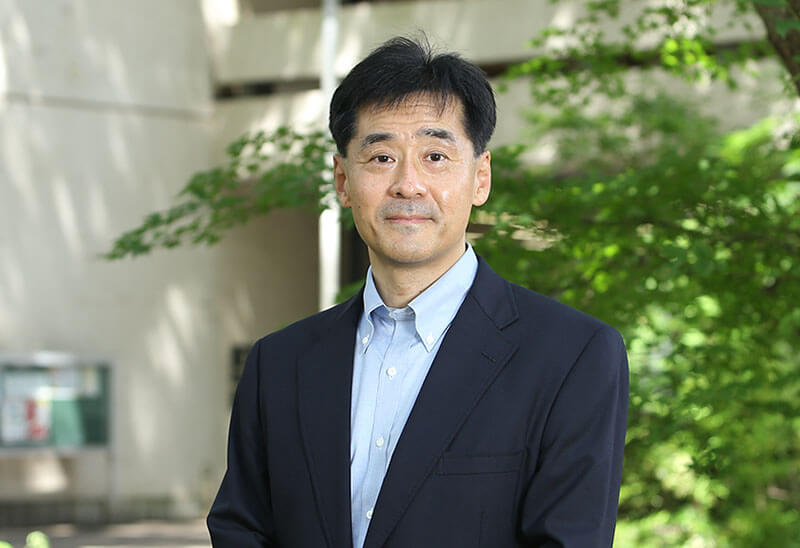
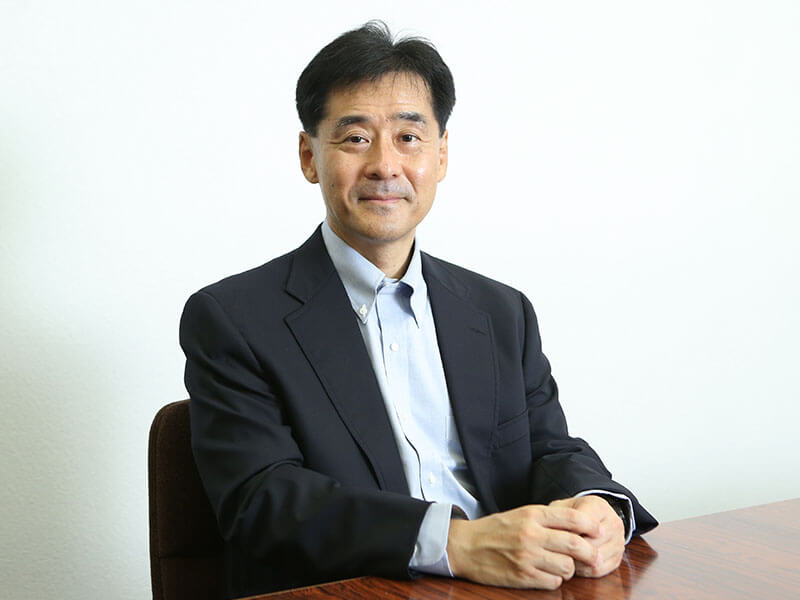
Professor Tetsuo Wada
- Research Fields
- Corporate Strategies for the Acquisition, Transaction, and Litigation of Intellectual Property Rights
- Profile
- Graduated from University of Tokyo Faculty of Law, General Legal Studies course, in 1989. Earned an MS from Berkeley Graduate School of Business at the University of California in 1994, and a PhD from the same school in 2003. Joined the Ministry of Posts and Telecommunications in 1989 and served as long-term overseas research fellow at the National Personnel Authority in 1992. Served as researcher and senior researcher at the Postal Research Institute from 1994. Became associate professor at Gakushuin University Faculty of Economics in 2000. Has held current position since 2004.

The ‘Loose Connections’ Created by Patents are a Guidepost for Next-generation Technologies
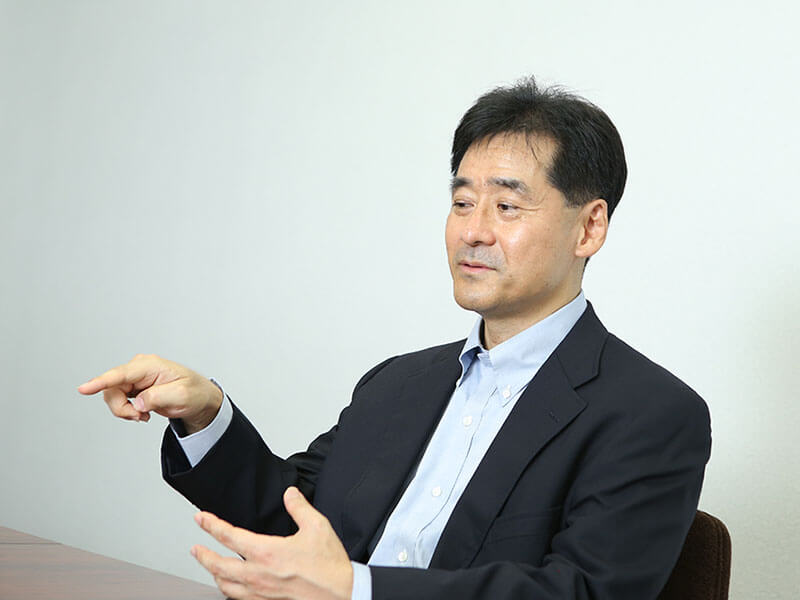
What image do the words ‘patent rights’ evoke? Patent rights provide exclusive rights to inventions that bring economic benefits and are likely understood by the average consumer as ‘the right to monopolise the results of one’s own inventions’. Professor Wada, however, confirms that patents not only restrict the use of others’ technology but also play an important role in protecting an inventor’s research efforts and in disseminating technology through licensing agreements.
“Patents are the right to prevent the unauthorised use of privately owned intellectual property. Even an agricultural field that you’ve worked hard to cultivate, fertilise and grow can be taken by someone else if it’s not clear whose land it is. If anyone else can claim that field, no-one will grow anything on it at all. Before a new patent is created, all sorts of attempts are made to try out something without necessarily knowing what the eventual outcome might be, and many failures can occur along the way. This is why patents have an established mechanism to protect the results of investment as private property.”
Patent rights - the resulting intellectual property - are tools that companies can use to increase profits and, ultimately, form the basis of international business activity. Professor Wada confirms that inter-company licensing is a way of overcoming the limitations of intellectual property rights to bring about overseas expansion.
“Even if you do aim to expand overseas, it’s not easy to grant local people a license to use your technology. There’s a risk that your company’s valuable core technology will be copied or improved upon, or that the technology will be leaked. This isn’t just about patents that protect technology; the use of intellectual property to expand overseas carries a risk even in service industries like restaurants and distribution, where inappropriate services might being offered under your company’s name, tarnishing its brand.”
The reason licensing agreements are being used despite known risks is due to delicate strategic relationships that exist between competing companies with advanced technologies. It’s precisely because they’re competitors that they possess important technologies that each other needs. The mutual granting of licenses between these companies, or so-called ‘cross-licensing’, is on the rise (at the time of interview).
Cross-licensing, in which companies exchange valuable know-how, is like holding onto a lifeline. One might imagine these relationships to be bound by strict contracts, but in the world of intellectual property they often end up being vague and loose.
“When it comes to advanced technology contracts, it’s impossible to write down every possible scenario as a life insurance policy would. Therefore, rather than binding each party into certain product specifications, quantities or terms of use, I believe that by connecting loosely through the mutual exchange of something valuable – as in an exchange of hostages - we might be able to achieve something together, founded on a relationship of trust. This hostage exchange concept is based on the ideas of my advisor, Professor Oliver E. Williamson. Under his supervision, I wrote my doctoral thesis on empirical research that showed that when high-tech companies engage in cross-licensing, innovation in related technologies becomes more active between those companies.”
The impact of COVID-19 on the role of patents
While patents continue to play an important role in business, a recent incident (at the time of interview) has significantly shaken their perception: U.S. President Joe Biden’s announcement of a plan to waive patent rights on COVID-19 vaccines.
“Experts in the intellectual property industry were shocked. We were being told not to act with such self-importance.”
The impact of patent rights on business varies greatly depending on the industry and product. Some industries can be said to be supported by patents, and the pharmaceutical industry is a prime example.
“Developing a blockbuster drug - a groundbreaking new drug - costs over 100 billion yen, yet the success rate is extremely low. Even if there are tens of thousands of candidate substances, only a small percentage of them make it to animal testing stage. And even if a drug passes animal testing, its development still carries a risk that problems may arise during clinical trials and that it may not be approved.
“To deal with any future pandemic, we need a drug development system that has a mechanism for returning profits back into the system. But looking at this from the perspective of developing countries where vaccines and medicines are in short supply, the reality is that patent protection can make drugs too expensive, and so they fail to prevent or treat diseases. As it’s a matter of life and death, the demand to be allowed to use existing drugs is compelling. But if drugs can be taken cheaply from those who have worked hard to create and develop them, what does this mean for those working on the next generation of technology? Patents are fraught with conflict between the development and use of medicines, which can even affect life and death.”
The guidance of a mentor opened a doorway to intellectual property
“I’ve been interested in economics since high school, but I thought law also seemed interesting. I wondered if I could study both fields, and it wasn’t until my second year of university that things became clearer to me.”
Before he encountered intellectual property rights, Professor Wada felt at a loss when choosing an academic discipline for his undergraduate studies. His days were spent in turmoil, until he met Professor Nobuhiro Nakayama, a leading expert in intellectual property.
“In terms of accumulated academic knowledge, the depth demonstrated by professors in the Faculty of Economics and the Faculty of Law was incredible. From the options available to me, I was particularly attracted to intellectual property as a theme that straddles the academic fields of economics and law. And in my second year, I was accepted onto an introductory seminar taught by Professor Nobuhiro Nakayama. I went to hear him speak in person many times. It seemed even to him that there were few undergraduate students who found intellectual property law interesting at the time, so he really took care of me. Professor Nakayama was truly wonderful, and I owe it all to him for having given me the foundation for who I am today.
“In addition to intellectual property law, I was able to gain exposure to cutting edge studies in business law, thanks to Professor Shinsaku Iwahara. It was in one of his seminars that I was introduced to the work of Professor Oliver E. Williamson, under whom I later had the opportunity to study directly at the University of California, Berkeley. Thanks to the guidance of these professors, I was able to position the study of intellectual property law, technology contracts and innovation as part of business management. It was through these encounters that I was able to become who I am today.”
Cultivating highly specialised professionals through graduate school
After life-changing encounters with his mentors, Professor Wada now teaches at Gakushuin University. He directs research that emphasises the limits of rationality, something he learned from Professor Williamson.
Microeconomics assumes that prices are negotiated in a ‘smooth, frictionless bargaining market’, where they are driven up or down by competitive pressures. In contrast, Professor Williamson understood that "humans are strategic beings with limits to their rationality”. He argued that the constraints of rationality are what give rise to the very existence of corporate organisations.
“Professor Williamson emphasised the importance of the details of real-world occurrences. In the past, economics was dominated by modelling that ignored reality. Professor Williamson’s academic style is the antithesis of this.”
Professor Wada describes Professor Williamson’s perspective as “a way of looking at things that, by studying pure theories, allows one to understand the importance of what gets discarded in the theorising process”. Those “discarded” elements are the friction that arises in real-world transactions. He says that friction often even exists in the field of patents, which are protected by rights.
“Professor Williamson believed that, in addition to the limits of rationality, the irreversible nature of actual transactions is one key factor in determining the severity of transaction friction. In the case of intellectual property transactions, when technology is licensed, it is thought that it will be utilised by those who can create greater value, since the creator of the technology is not necessarily the one who knows how to use it to the greatest economic effect. However, in reality, even if intellectual property is protected by patent rights, licensing transactions carry risks. Once the details and development potential of the invention become known to the other party, it is impossible to restore things to how they were before the transaction, which could pose a threat to the party granting the licence. Furthermore, friction is created even if only the use of a patent is permitted, in that the value of the patent cannot be fully utilised unless the accompanying know-how is also provided, making those seeking to purchase a license hesitant.
“Furthermore, even if a license agreement becomes invalid, it is not possible to restore everything to the status quo as it stood before the transaction, including the fact that the investment in physical assets associated with the use of the patent cannot be invalidated. There are many issues beyond intellectual property where it is impossible to resolve frictions that could hinder such transactions. Professor Williamson suggested the possibility of vertical integration or joint ventures as a way of resolving these frictions.
“This understanding of corporate organisations cannot be derived from overly simplistic theories of microeconomics or market mechanisms. It was Professor Williamson who explained the basic principle that corporate organisations exist to resolve frictions that arise in transactions.
“It may sound like a stretch, but the essential difference between whether a company should raise funds through stock or debt can be understood from the same principle of the limits of human rationality. There is a famous theorem that states that, in a frictionless world, there is no difference in the corporate value of either party, and it was Professor Williamson who also provided the key to solving this. I came across Professor Williamson's work in this context when studying corporate law with Professor Iwahara, more than 30 years ago. Intellectual property and corporate governance share a common fundamental premise: that humans cooperate and operate legal systems through strategic ingenuity."
Professor Wada explains that the value of graduate school education lies in understanding the theories and real-world problems of our predecessors and summarising them in academic papers. Graduate school education is not necessary if you are only interested in issues that arise in the business world. The significance of accumulating academic knowledge comes into play when you understand issues more deeply and from a general perspective. This is the foundation for becoming a highly specialised professional. This is why he says graduate school is so important.
“Many of our graduates say that their graduate studies have given them an advantage. For example, in the medical industry, businesses are run by doctors, many of whom are experts who continue to write papers. In order to understand the culture of these people and what’s happening at the cutting edge of knowledge, the experience of engaging with academic research at graduate school is invaluable.”
In the past, both faculties and companies played a part in nurturing such professionals. However, given the current employment situation, the latter’s role has become more difficult. Professor Wada urges students to rediscover the “value of graduate schools as a training institutions”.
“Students look for employment on the assumption that they’ll change jobs in a few years, and companies hire them on the assumption that they might quit. Meanwhile, a new job market is emerging that emphasises professional skills and which involves competition with a wide variety of other companies, and this is known as the job-based system. It seems we’re living in an age where we have no choice but to set our own goals and develop our own professional skills. Given this current situation, I hope people will make use of graduate school with its ability to develop professionals. While superficial skills can be developed by yourself via online learning materials, the accumulation of human knowledge is far more profound than that which can be acquired as an undergraduate, and there are many aspects that can only be mastered at graduate school."
According to a survey by the Ministry of Education, Culture, Sports, Science and Technology, the percentage of students who go on to graduate school after graduating with a bachelor’s degree is low for social sciences, at just 2.5%. Whereas internationally, there is a trend toward making graduate school completion the minimum standard.
“Graduate school completion is becoming a minimum requirement for employment at international organisations such as the United Nations. This is proof that the value of the graduate school as a training institution is recognised in the West. Now that the door is closing on the era in which human resource mobility was limited to a single country, the advantage of having been exposed to academic research at graduate school will be put to good use in knowledge-intensive jobs in Japan as well.
“One aspect of social science in graduate school is that research with a practical problem-solving approach is required. My lab places emphasis on the scientific skill of being aware of causal relationships and using data to demonstrate evidence, which will enable graduate students to produce impressive analytical results. For example, we have databases and software that can analyse changes in the corporate value of multinational companies from the perspective of individual technologies and inventors. It would be a waste to use data science to analyse only visible, superficial phenomena. When you come across an application of data science to fundamental problems that span business administration, economics and law, you will find it will be worth devoting your life to pursuing it.
“Patents are similar to corporate governance in that they are an interdisciplinary area of study that draws on the combined efforts of business administration, economics and law. Furthermore, even within the social sciences, their understanding can only be deepened by gaining experience in the field, and there are many examples where science and engineering majors have found clues to the appeal of social science. If you find the relationship between patents and business activities, the competitive and strategic relationships between companies or the analysis of organisations and legal systems fascinating, I encourage you to come and visit my lab.”
| Date of interview: | 11 November 2021 |
| Interviewer/writer: | Hiroyuki Tezuka |
Positions and affiliations reflect information at the time of the interview.
Date of interview: 11 November 2021 / Interviewer/writer: Hiroyuki Tezuka
Positions and affiliations reflect information at the time of the interview.