 Interview
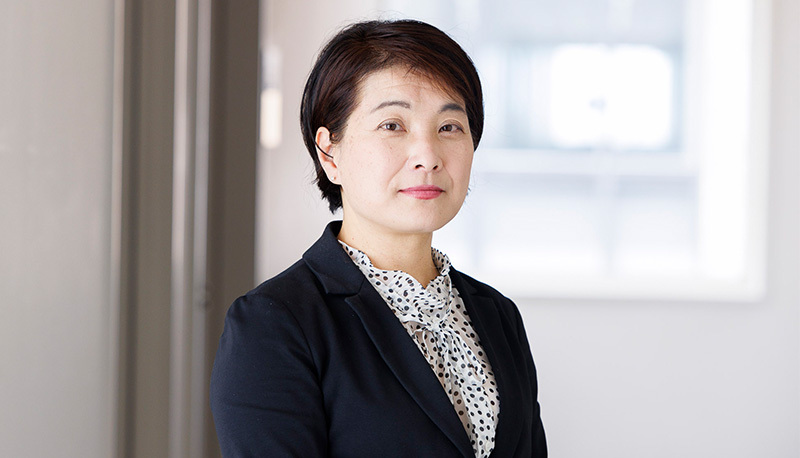
Professor Mariko Watanabe
- Research Fields
- Applied microeconomics (empirical industrial organisation, law and economics, contract theory, empirical analysis of corporate behaviour and economic development), field surveys of companies, industries and economies in China and other developing countries
- Profile
- Graduated from University of Tokyo Faculty of Economics in 1991 and joined the Institute of Developing Economies that same year. Enrolled in University of Hong Kong School of Business in 1996 and earned MPhil in December 1999. Served as visiting scholar at Beijing University Guanghua School of Management for three years from 2006-2013. After returning to Japan, earned PhD from University of Tokyo Graduate School of Economics in 2011. Has occupied current position since 2013.

Uncovering the Path to Business Development in Asia through Field Surveys and Economic Analysis
Witnessing China's Energy Up Close — and Feeling the Urgency to Learn
Professor Mariko Watanabe’s career began in China. It was in 1992, when Deng Xiaoping’s famous ‘Southern Tour Speech’ set off a chain of reactions across the Chinese economy. She was right there in the middle of it. Fresh out of the Faculty of Economics at the University of Tokyo, she joined the Institute of Developing Economies and was assigned to China-- “the most interesting country at that time”, as she puts it-keeping a close eye on the country’s budding entrepreneurs.
China is the world’s second largest economy today, but back then, it was still trailing Japan across almost all industries. China was beginning to show its face as “world’s factory” of mass production and mass consumption, Then, in the early 2000s, a new wave washed over the Chinese business world, -- the rise of the internet.
At a conference hosted by Japan’s Ministry of Economy, Trade and Industry, some young entrepreneurs like Jack Ma, the founder of Alibaba – which, at the time, had only been in business for about three years - were included among the delegates. The Chinese government at that time, was pushing economic growth above ideology, which created fertile ground for new players to develop technologies on their own terms.”
China quickly absorbed the internet revolution, creating services that were uniquely Chinese. This was driven not by the state-backed, state-owned enterprises, but by young, privately-run startups whose founders operated from a position of political vulnerability. As smartphones spread and the internet erupted in earnest, a wave of digital technologies emerged. Several characteristics of the internet technologies served to nurture and protect those politically marginalized young companies throughout the 2010s. The state-led ‘Digital China’ initiative built on the momentum created by those young entrepreneurs, eventually transforming China into a digital powerhouse was complete, a transformation now widely known in Japan.
Throughout all of this, Professor Watanabe was studying the reality of the Chinese economy and trying to make sense of the underlying mechanisms. The problems she encountered during these experiences made her keenly aware of the need for solid theoretical grounding.
“I started to feel that accurate analysis was not possible just by looking at the facts. Without a hypothesis, any logic would be valid. At the time, there was a tendency for field surveys and analysis to be carried out by different kinds of scholars. But I realised that, without acquiring knowledge based on theory, field surveys could not be conducted adequately. I needed to extend my knowledge beyond my undergraduate studies.”
Professor Watanabe went on to complete her Master’s degree at the University of Hong Kong School of Business in 1999 and earned her doctorate in 2011 at the University of Tokyo Graduate School of Economics. Her doctoral thesis focused on empirical contract theory, but she became fascinated during her studies by the potential of empirical industrial organisation, and this determined the direction of her future career.
Input and Output: Graduate School Is a Place to Acquire Essential Life Skills
At Gakushuin University, Professor Watanabe is currently conducting research on the topic of applied microeconomics and field surveys of companies, industries and economies in China and other developing countries. In her graduate seminars, she draws directly on her own experience to emphasize the importance of analysis grounded in real-world investigation — and holds her students to the same standard.
"I push my students to dig deep into the data and facts behind whatever topic they choose. It's not enough to skim newspaper and magazine articles for surface-level information — they need to understand how things actually work and why they exist in the first place. Sometimes that means going straight to the source and talking directly to producers or engineers on the ground."
What kind of research do graduate students conduct after receiving Professor Watanabe’s guidance on ‘analysis through field surveys’? Professor Watanabe cites two concrete examples.
“The first was research by a student for whom I was a co-supervisor. It began with the student wanting to compare the business models of Chinese smartphone manufacturers. In terms of technology, 4G had just begun to emerge, and China was witnessing the rapid expansion of mobile payment platforms, such as Alipay. I assigned my student the theme of ‘Considering services from both the consumer and supplier perspectives and understanding how each works.’ While we can imagine the consumer side of things from our own experience, for the supplier side the student first needed to go back to the basics of ‘What is a smartphone?’ and deepen his understanding of the technology, components and structure used.
“Once the structure became clear, we could see what components were on the circuit board and what function they performed. We could then check whether each component was made by a single company, or whether the work was divided among different companies. To understand this business structure, the student went far beyond news and the media research - he dug into technical reports released by companies and engineers - and even interviewed the engineers themselves. By the time he was done, he was able to understand how smartphones are actually made, and the depth of his research showed.
“The other project was a study of the PC gaming platform ‘Steam’. This student loves games, and wanted to research the business strategy of various game titles available on the platform. Steam publicly releases data on how many people play specific games each day and which items they purchase. He took daily screenshots of this data and built his own database from scratch.
“Looking through the data, you can see real business impacts- how sales increases during in-game events, how advertising attracted new users. He also analyzed the network effects that come from having a large number of players on the platform, and incorporated the effect into management evaluation.
It was extremely time-consuming to collect data, but the effort paid off, the research became a substantial piece of research.”
"In my own research, I start from an interesting phenomenon and apply economic theory to it and work through to analysis of collected data. So I ask my students to keep three things in mind: microeconomics, econometrics, and gathering data that captures firm strategy. That said, for Master's students, covering all three in two years is a tall order — so I tell them it's fine to focus on just one."
“What I really care about in my graduate seminars is training students is to produce output’. Undergraduate education focuses on input through lectures, offers a very limited opportunities for producing output. Graduate school is about taking what you have absorbed and learning how to organize and communicate it. That is the skill I believe students should have acquired when they leave the graduate school. Even as AI advances and begins to replace labour, the ability to think independently, frame the right question, communicate conclusions clearly, will remain essential. Graduate school isn’t a place for specialised training; it’s a place to acquire life skills.”
Training Business Leaders Who Can Compete on the Global Stage
Professor Watanabe warns about Japan’s lag in digitalisation . Historically, the economic growth of developed nations was driven by a pioneering spirit — boldly creating new technologies and industries, then handing off maturing ones to the emerging economies that followed. The pattern was once neatly captured by the "flying geese" model proposed by Professor Akamatsu in the 1960s, which showed industries migrating from advanced to developing nations in a formation resembling geese in flight.
But when it comes to absorbing digital technology, China and emerging Asian economies have proven far more aggressive and effective. In a world being reshaped by digitalization, the strategy known as "disruptive innovation" appears to be hitting harder than ever.
“Not only China has become an IT powerhouse, but this has also prompted the birth of groundbreaking business platforms in emerging Asian countries. Indonesia’s GOJEK and Singapore’s Grab are prime examples, and they are already expanding both domestically and internationally.
“The emergence of these global platforms does not simply mean the expansion of IT services. Businesses that could even supplant Alibaba are emerging one after another in Asia, including in India, Indonesia, Thailand and Malaysia. Unfortunately, no such platform with a global strategy has emerged in Japan.”
Professor Watanabe has felt this gap first-hand. Since 2018, she has partnered with a company, whose service originated in Hong Kong and China, to run a real-world experiment with shared mobile battery services. The biggest hurdle at the early stage, she says, was the absence in Japan of the kind of super-app mobile payment service that virtually everyone uses in China.
Japan's digital lag comes down largely to the fact that, as a developed economy, the cost of replacing existing technology is far higher than it is in developing nations. Overcoming that requires coordinated government leadership — developed economies need that kind of top-down adjustment more than anyone. In China and Southeast Asia, by contrast, companies took it upon themselves to map out a broader strategy and drive structural industrial transformation. And when clusters of companies adopting new technology grew large enough to take on innovation themselves, the economy's structural shift kicked into a higher gear.
“The payment service story is part of a bigger picture. Japan has now reached a stage where it needs to re-examine the strategies of emerging countries. In one of my undergraduate classes, ‘Emerging Market Enterprises’, I define catch-up economies and explain, with as much theoretical clarity as possible, the competitive strategies adopted by companies in these advancing economies: how they are using digital technology and what they are doing to catch up with developed countries. As exemplified by Alibaba and Tencent, Asian companies are far ahead in platform businesses. I would encourage Japanese entrepreneurs to re-examine business practices in emerging markets.”
Advocating for professionals to return to education and develop the skills to compete at the cutting edge, Professor Watanabe makes a strong case for graduate school.
“Unfortunately, in Japan, going to graduate school carries a vague stigma. But what actually serves you in the working world is the ability to organise what you have learned apply what you’ve learned once you enter the workforce.
Rather than drifting along and leaving your life entirely in the hands of the organization you joined, you need to be able to take control of your own path. Going through the experience of designing your own research and writing a Master's thesis is part of building that capacity."
“I believe it’s essential for everyone who enters the workforce to have this kind of experience. Going forward, the amount of business Japan conducts overseas, particularly in emerging Asian countries, will increase. How do you deal with partners and technologies you’ve never seen or heard of before? Receiving abstract training at a graduate school is effective training. To understand these partners and connect them to business in Japan, you need the ability to investigate their actual situations and build a vision that will lead to future business ventures.
“The graduate school at Gakushuin University is by no means large, but it’s precisely because of its size that you can get close to your professors, making it the perfect environment for repeated cycle of input and output research. There’s no need to be overly tense about ‘studying at a graduate school, and I’m proud to say it’s an environment where you can devote yourself to the research you are interested in without feeling pressured. If you’re looking for the knowledge and skills to compete on the front lines of business, then come and join Gakushuin! I look forward to meeting people who will make full use of my expertise to help them develop into professionals who will shape Japan’s future.”
| Date of interview: | June 15, 2022 |
| Interviewer/writer: | Hiroyuki Tezuka |
| Photography: | Yoshikuni Nakagawa |
Positions and affiliations reflect information at the time of the interview.
Date of interview: June 15, 2022 / Interviewer/writer: Hiroyuki Tezuka / Photography: Yoshikuni Nakagawa
Positions and affiliations reflect information at the time of the interview.