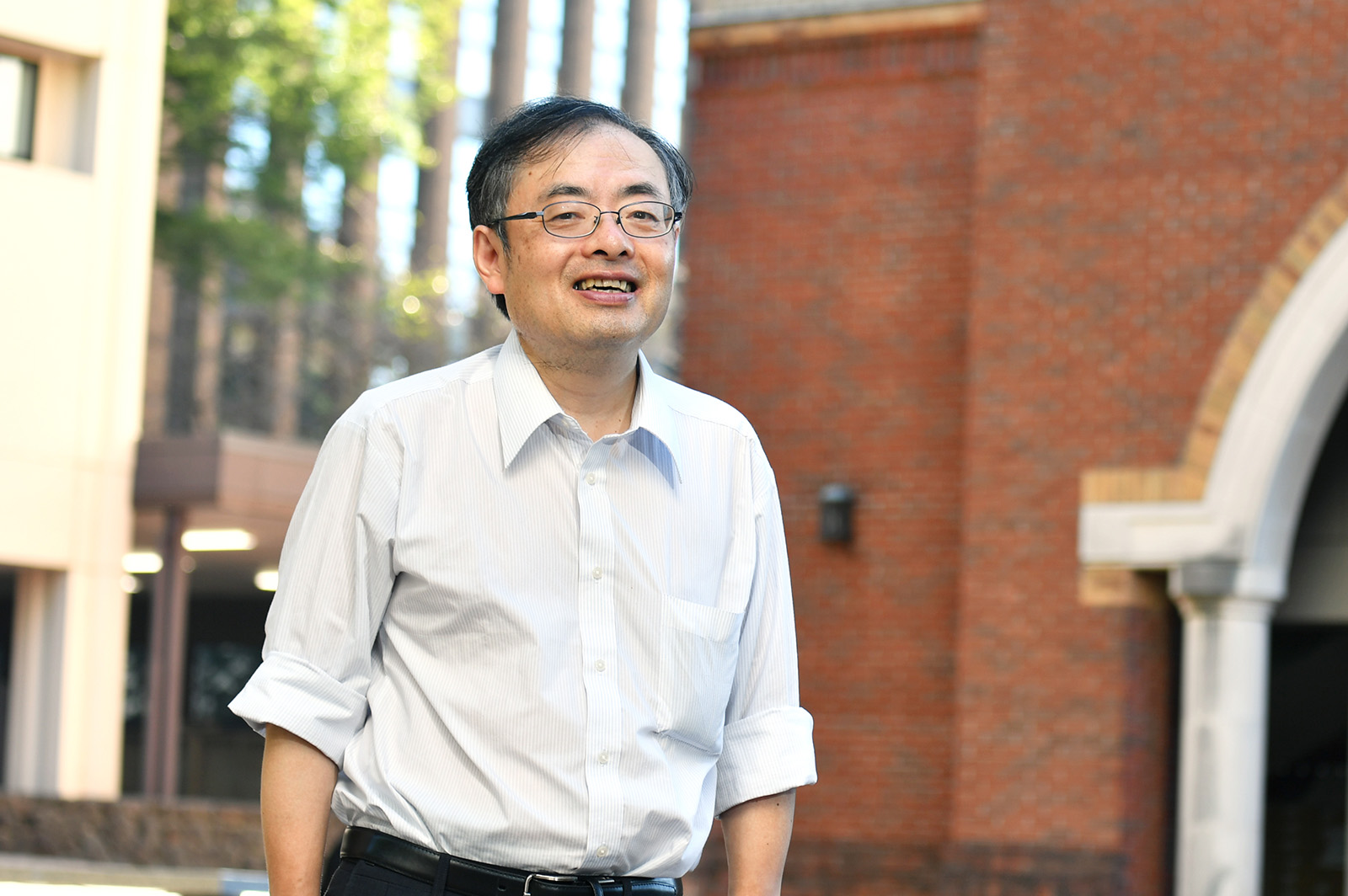
 Interview
Professor Naoyuki Kaneda
- Research Fields
- Accounting, Empirical Analysis in the Accounting Field Faculty Profile
- Profile
- Graduated from University of Tokyo College of Arts and Sciences in 1987. Moved to the United States after working for a Japanese insurance company. Earned a master’s in business administration from New York University in 1995. After working at a local accounting firm, earned a PhD from Carnegie Mellon University in 2002 and that same year became lecturer at University of Tsukuba Department of Social and Environmental Engineering. Became assistant professor at Gakushuin University Faculty of Economics in 2005. Has held current position since 2007.

Learning the Rules Beyond the Rules: Viewing Companies Flexibly and from Multiple Angles.
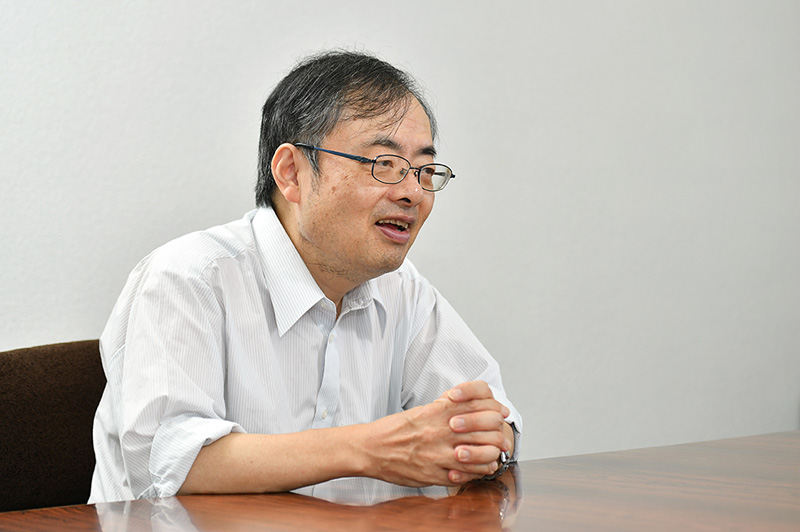
From the private sector to New York: an academic journey driven by intellectual curiosity
Professor Kaneda’s career path has by no means been straightforward. He decided to pursue accounting six years after graduating from the University of Tokyo and after joining an insurance company. While working in the securities investment department, Professor Kaneda’s interest in accounting grew as he came into contact with the numbers that shape companies.
“I was already familiar with financial statements, but as I increasingly encountered them in my work, my interest gradually developed. I had always been interested in institutional theory, so I had a strong desire to systematically study accounting, which looks at a company’s past and future through its numbers.”
Professor Kaneda decided to leave his stable job at the insurance company and head to graduate school at New York University. Looking back now on that period, he laughs. “I crossed the ocean with the sole aim of studying. I was still young back then.” Passionate about his accounting research, Professor Kaneda earned his MBA (Master of Business Administration) in two years and then joined an accounting firm in the United States, the centre of the global economy. It was while he was working as an accountant that another turning point for Professor Kaneda came.
“I joined an accounting firm after earning my MBA, but I realised there were some things you can’t understand without actually doing them, and I wanted to learn more. The experience I gained during this period, when I learned how accounting systems are used in practice and how they can be useful, has been extremely helpful in understanding economic analysis.”
Having seen first-hand how research results and practical work fuse together, Professor Kaneda’s thirst for knowledge led him to study at Carnegie Mellon University Graduate School, where he pursued a research path with a stronger analytical focus. The research he conducted for his thesis included mathematical model analysis of research and development expense accounting under international accounting standards and an examination based on analyst forecasts of the impact on accounting of changes in CEO personnel.
After returning to Japan with his PhD, Professor Kaneda chose to pursue a career as a researcher rather than to return to the private sector. The motivation behind his choice was nothing other than his ever-increasing intellectual curiosity.
“Japan has adopted a variety of international systems over the past century or so, and these are not limited to the world of accounting. However, even when overseas systems are adopted in Japan, it’s not uncommon for them to take on a completely different form when applied in practice. Comparing international systems is extremely important for our understanding of the role that these changes play.
“I am still fascinated by the impact that various systems, including accounting, have on corporate behaviour. I hope to continue stimulating my intellectual curiosity while also striving to utilise my research for the benefit of society.”
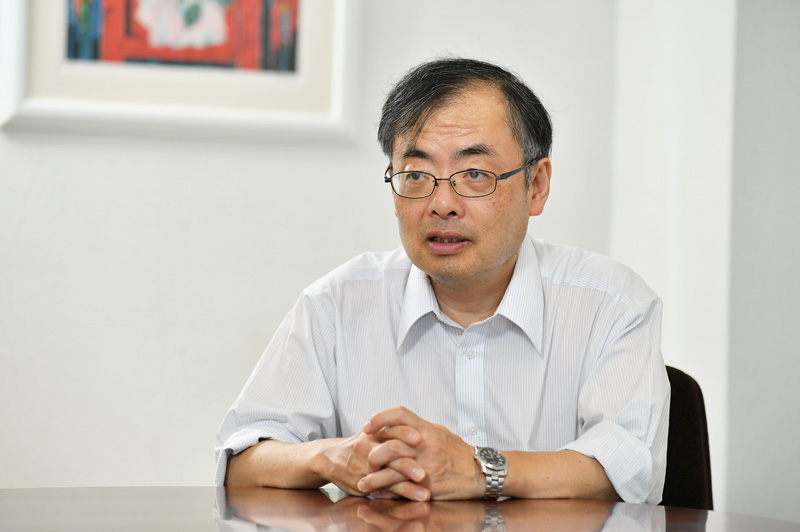
‘Why do rules exist?’ An unconventional management accounting response
Professor Kaneda’s research themes are diverse. In addition to the topic he addressed in his doctoral thesis, he has also conducted extensive research on subjects listed in his university faculty profile, including ‘management methods surrounding corporate restructuring and M&A’, ‘research on tax systems and corporate management’ and ‘empirical research on accounting’. Beyond this, he has delivered lectures on topics such as ‘Japanese real estate valuation through statutory useful life’, ‘accounting risks between U.S. accounting firms and China’, and ‘Japan Airlines receivables’. His research themes are too numerous to list.
Professor Kaneda does not approach accounting randomly. He assesses and analyses every aspect of a company from an accounting perspective. His research is multifaceted and is based on his expertise in management accounting.
“Financial accounting and tax accounting are intended for external reporting, so they are based on a set of established rules. Management accounting, on the other hand, analyses data based on unique objectives and rules for decision-making, so it requires flexible thinking and a multifaceted approach. How should a company be managed? How can we create a healthy business? The exploration of various methods is required to observe change.”
This thinking is also evident in the content of Professor Kaneda’s course, ‘Introduction to Tax Strategy’, which is taught at graduate school level and is a special course at undergraduate level. This course does not provide a detailed explanation of the tax system but instead examines it using a planning approach.
“The planning approach analyses the impact of tax systems on economic decision-making and considers how taxes affect business activities. How do companies reduce operating costs? And how does the tax system respond to corporate cost reductions? Rather than studying tax systems as rules, it is important to learn about their role and how they should be observed in corporate accounting.
“When we talk about financial accounting and tax accounting, there is a tendency to focus on rules that are required in the workplace. While rules are certainly important, the main theme in accounting is corporate management and economic management. Whether studying financial accounting or tax accounting, I believe it is important to go beyond studying the fine print and instead learn flexibly from the perspective of why the rules exist and what lies behind them.”
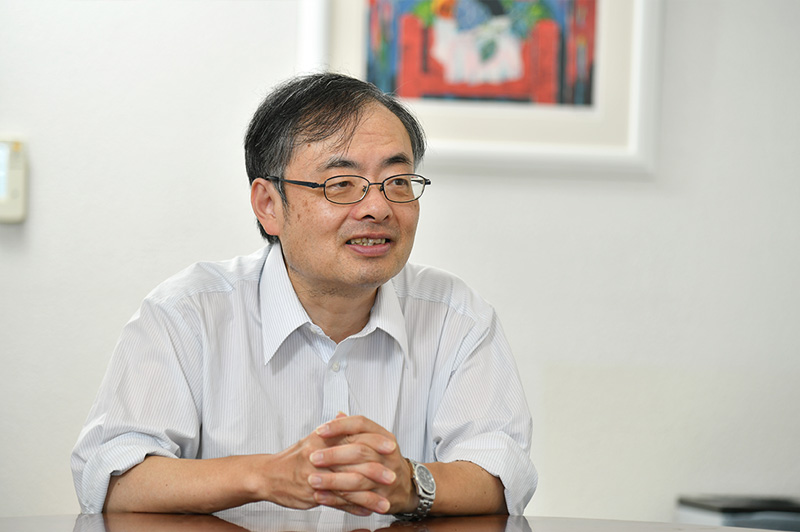
AI, big data, and social issues: research that evolves with the times
“Looking at recent academic presentations, I feel there has been an increase in empirical research on initiatives such as ESG and sustainability. These are topics that are attracting global attention and they have a significant impact on corporate management, including investment decisions,” says Professor Kaneda. Additionally, he says there are signs of a trend toward utilising cutting-edge technology in the workplace, such as the use of AI and big data in audits and accounting analysis.
How should people approach these changing times? Professor Kaneda suggests that one answer lies in graduate school learning.
“When I read a book about AI and white-collar learning, I felt it was similar to what I learned in my doctoral programme. Rather than simply learning from past papers, we set and test hypotheses derived from various data. I feel that the importance of this type of hypothesis testing is becoming recognised not only in academia but also in the corporate world.
“The appeal of graduate school is that it allows you to delve into the underlying concepts behind something as simple as accounting standards and to deepen your learning through hypothesis testing. Graduate school offers a learning environment where you can study accounting by employing an academic approach, such as logical, evidence-based research using archival data and experimental economics using simulations.”
By leveraging the basic knowledge and concepts acquired during undergraduate studies, you gain new insights through your own research. Professor Kaneda says that days spent researching at graduate school can literally open up new worlds.
“We have many international students, especially from China. Their research topics aren’t necessarily related to their home countries; they increasingly address global issues, like the aforementioned ESG. While their research topics are not all necessarily similar to my own, we all enjoy working together.”
Professor Kaneda concludes by saying that studying at graduate school is incredibly enjoyable, and that studying at Gakushuin University can be especially fulfilling.
“Accounting is a discipline with strong ties to society and which has a variety of effects on corporate organisations. I believe it’s a rewarding field for anyone who can understand concepts that have existed for a long time and can then apply them. While Gakushuin is by no means a large university, I feel it offers an excellent research environment.
“The library for the Faculty of Law and Faculty of Economics on campus has extensive collections, which include a wide selection of materials and books on systems and empirical analysis for my field of research. Also, because the university is small, students enjoy close contact with professors and have plenty of opportunities to interact with talented researchers. If you have the ambition to derive new theories from research and, ultimately, to contribute to society, I highly recommend Gakushuin for your research. Let’s enjoy researching here together.”
| Date of interview: | September 21, 2023 |
| Interviewer/writer: | Hiroyuki Tezuka |
Positions and affiliations reflect information at the time of the interview.
Date of interview: September 21, 2023 / Interviewer/writer: Hiroyuki Tezuka
Positions and affiliations reflect information at the time of the interview.