 Interview
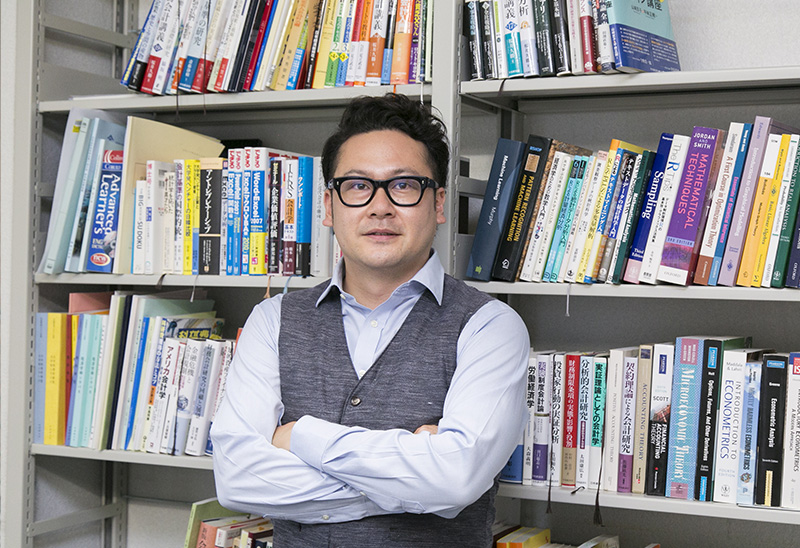
Professor Katsuhiro Motokawa
- Research Fields
- Financial Accounting, Integrated Reporting, Statistical Methods for Accounting Research
- Profile
- Graduated from Kyoto University Faculty of Economics in 2005. Completed master’s in mathematics and statistics at the University of Oxford in 2010. Worked for a management consulting firm 2010-2011. Completed doctoral studies at Kyoto University Graduate School of Economics in 2015. Became associate professor at Gakushuin University Faculty of Economics in 2016. Received PhD in Economics from Kyoto University in 2018. Extramural activities include the Japan Association for the Accounting Research and European Accounting Association.

Asking Companies - and Challenging Ourselves - to Disclose Information Fairly
First and foremost, an awareness of the problem
“Am I lacking the English language skills and knowledge of finance and statistics to successfully become an accounting researcher?”
“Will it be difficult to understand finance and statistics in the strict sense without mastering pure mathematics?”
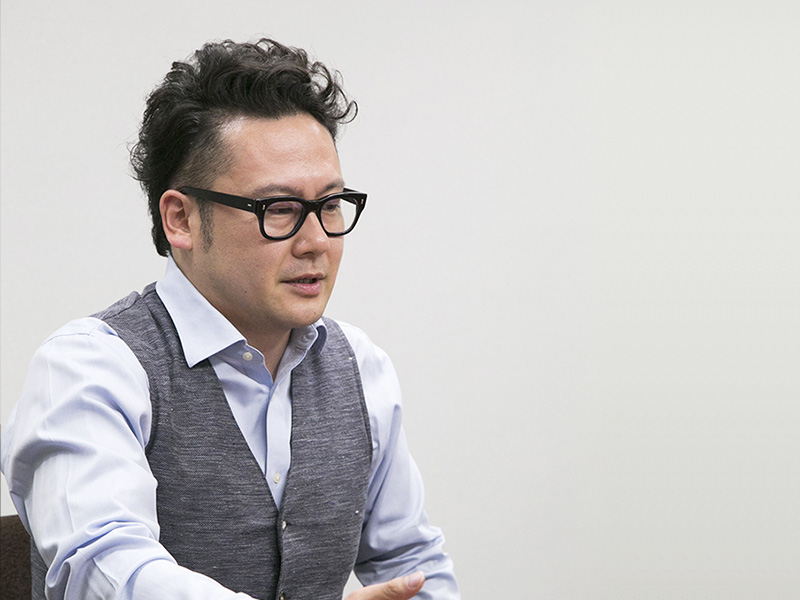
These were concerns that were acutely felt by Associate Professor Katsuhiro Motokawa while he was writing his graduation thesis in the fourth year of his undergraduate studies. But while he struggled with the thesis, he began to find his research fascinating. And a desire grew in him to become a researcher one day.
So, after graduating, he enrolled once again as an undergraduate student at Oxford University, changing his major from Economics to Mathematics. He eventually earned a master's in mathematics and statistics. He then returned to Japan and gained experience working at a consulting company affiliated to an auditing firm, before returning to graduate school in Kyoto to study accounting. He became an associate professor at Gakushuin University in 2016 and then earned his PhD in Economics in 2018.
Associate Professor Motokawa is currently researching the disclosure of financial and non-financial information related to human capital, driven by a concern that “current disclosure methods may have limitations”.
“In particular, when it comes to intangible assets, how do we disclose to investors information other than the numbers that don’t appear on financial statements, also known as non-financial information? In my doctoral thesis, I focused on human capital and employee information, because I believe that this is the source of value creation for a company.”
Investors are not the only ones seeking non-financial information
“For example, the information that job-hunting students really want to know - information about a company’s salary structure, efforts to make the workplace comfortable for employees and information about human capital, such as the rate of turnover - goes largely undisclosed currently. I would eventually like to conduct research on information disclosure to the labour market.”
Right now, he says his biggest concern is over how information that needs to be disclosed is presented.
“Companies do disclose information, but in many cases they simply list information by category, such employees or intellectual property. This does not reveal the story of the value creation process, such as what relationships exist between different categories, what impact they have, and how much profit they expect them to bring in the future. Companies should communicate this in a more concrete and transparent way to investors and, more broadly, to stakeholders. I would like to move forward with research into the structuring of disclosed information, to determine what information should be disclosed and how.”
What is problem awareness and where does it come from?
“First of all, is current accounting theory correct? Do you think the current accounting system is the best?”
On his website, Associate Professor Motokawa poses the following question to undergraduate students: “Up until high school, we learn things that are probably certain. But, from university onwards, we learn things that we don’t know are certain. What will you learn at university and how will you go about doing it?” So, what message would he have for graduate students? The answer lies in the question posed above: ‘What is problem awareness and where does it come from?’
If you have doubts about the current state of the accounting system, those doubts could become a research topic in graduate school, and the results of that research could contribute to society by providing new insights for revising that system. Conversely, if you have no doubts, you should put that knowledge to good use and be active in the workplace. To avoid any misunderstanding, this is not to deny the importance of work, but rather to explain that each of us has a role to play in society.
“First, you need to have a strong sense of problem awareness. What accounting problems in society do you want to address? Without this, it’s impossible to provide guidance on what literature is available, what research has already been conducted and what research you should undertake to tackle the problem.”
So, what is problem awareness? Where does it come from?
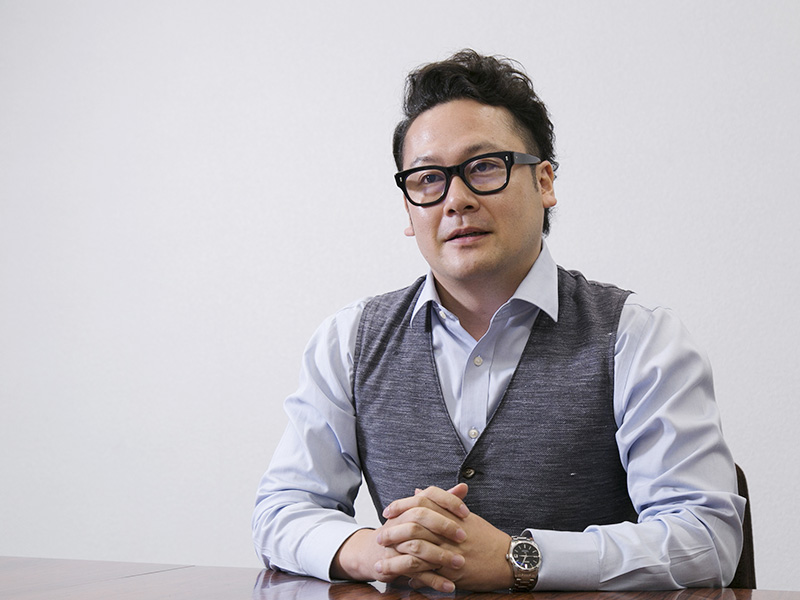
Associate Professor Motokawa often poses this question to his undergraduate students, but he says that many of them mistakenly equate problem awareness with social issues.
“Awareness of problems is the seed of research. I want students to value the doubts and discomfort that arise from what they themselves have experienced in society at large and what they have learned at university. I want students to come to graduate school with a clear understanding of ‘what the problem is with current accounting theory and practice’ and of ‘why solving that problem is important’. I think a willingness to get actively involved is more important than what they already know.
“My mentor was someone who didn’t mind at all if his research interests differed from those of his students. This allowed me to pursue my own research interests to my heart’s content. Because of the education I received, I encourage graduate students to conduct their own research fairly freely. I first want to hear from each of them about their research interests and awareness of problems.”
Pit your opinion against past researchers
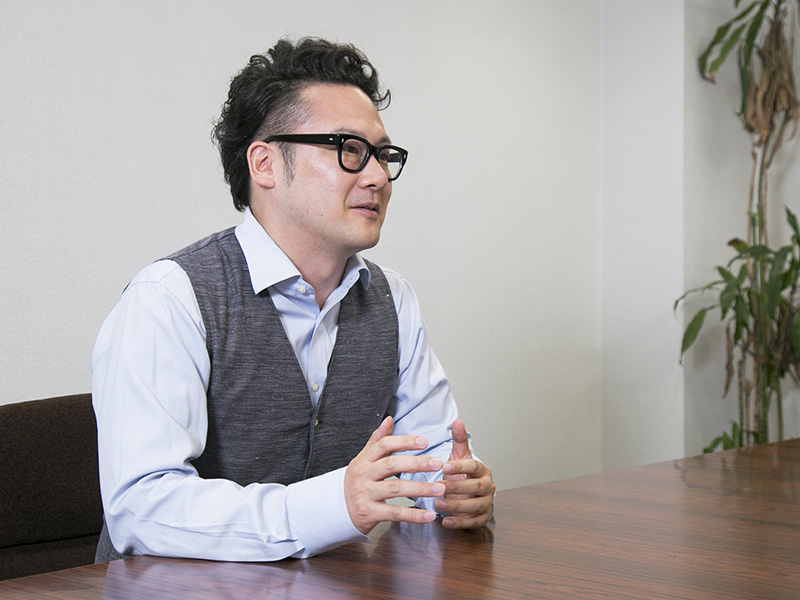
There is no single way to conduct research. Each supervisor has a different style. Associate Professor Motokawa says, “It’s not my style to decide on a methodology in advance.”
“I always want students to start with a clear understanding of the problem and then choose the appropriate method to solve it.
“As much as possible, I try to avoid preconceived methodology in my research guidance, such as using one method because a student is an empiricist and another because he is a theorist.
“Research should begin with a clear understanding of the problem, then a reconstruction of what discussions on the issue have been held to date, and then a new opinion must be pitted against those of prior researchers. After thoroughly discussing pre-existing research, researchers should then seek, select and write about a methodology that supports their opinion. Different professors have different teaching methods, but I believe this is the way research should be conducted.”
“Perhaps what makes me unique as an accounting scholar is that I have a degree in mathematics,” says Associate Professor Motokawa.
“I can at least understand those who want to take a mathematics-related approach. I believe there are also research projects that use mathematical knowledge and that involve building models, and I would be happy to join in and learn more from them. I have also studied abroad and, since my master’s degree, I have written all my papers in English. So I welcome those who want to receive guidance or write their papers in English.”
“I’m certainly not forcing empirical studies on anyone,” Associate Professor Motokawa states, before continuing, “but I personally think that, for anyone who wants to write empirical papers in English, I’m not such a bad choice.”
What’s more, there aren’t many researchers working with non-financial information.
“If there were graduate students who could actually analyse statistical text data, we could work together on such research, and I would be secretly grateful. I am also currently studying, and believe that those who want to use more advanced statistical knowledge than multiple regression analysis - especially those who have topics they want to analyse using statistical methods such as structural causal models, covariance structure analysis and machine learning - may be close to my own current research interests.”
After saying this, Associate Professor Motokawa falls silent for a moment. Should he say so much? Or should he perhaps not say anything? He’s always faced with a dilemma whenever he’s interviewed, he reveals, because it could come across as him forcing his methodology on others.
“What do you want to achieve with accounting topics? I want students to start with an awareness of the problem, but ultimately, do I want them to prove it? If they want to make full use of my knowledge, I’ll end up telling them that’s what they should do.”
In his self-introduction in Faculty of Economics literature, Associate Professor Motokawa wrote that he’s “interested in what rules for corporate information disclosure would be ‘fair’ for stakeholders” and that he “will work on this in the long term”.
Throughout the interview, Associate Professor Motokawa addressed each question with honesty and a clear awareness of the relevant issues, carefully considering what constitutes fair information disclosure by researchers to students. His approach demonstrated a strong commitment to both research integrity and student engagement.
| Date of interview: | October 5, 2018 |
| Interviewer/writer: | Kazuya Endo Office |
| Photography: | Takehito Matsumura |
Positions and affiliations reflect information at the time of the interview.
Date of interview: October 5, 2018 / Interviewer/writer: Kazuya Endo Office / Photography: Takehito Matsumura
Positions and affiliations reflect information at the time of the interview.