 Interview
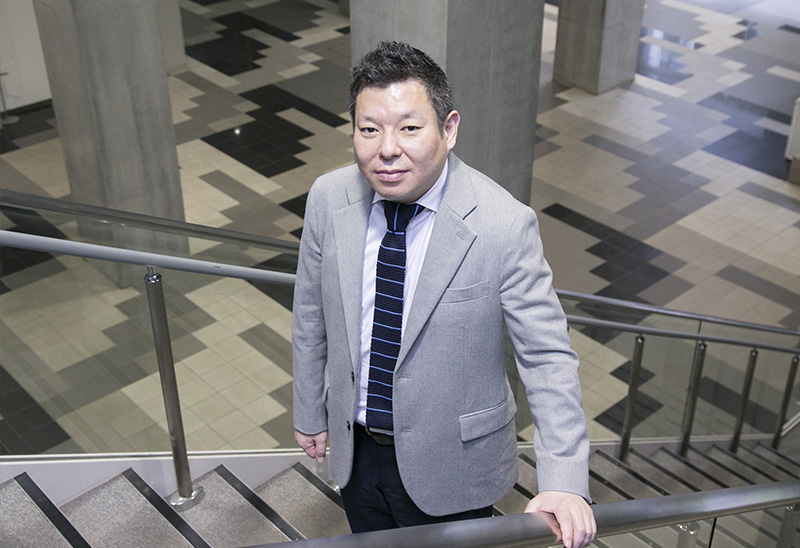
Professor Tomokazu Takeuchi
- Research Fields
- Organisational Behaviour, Career Theory, Human Resource Management
- Profile
- Became Associate Professor at Gakushuin University Faculty of Economics in 2011 after serving as full-time lecturer and associate professor at other universities. Has held current position since 2013. Served as visiting researcher at UCLA (University of California, Los Angeles) Anderson School of Management in 2017. Served as visiting professor at Keio Business School, Graduate School of Business and Administrative Sciences, Keio University in 2018.

The Joy of Unravelling the Mechanisms Behind Employee Awareness and Behaviour
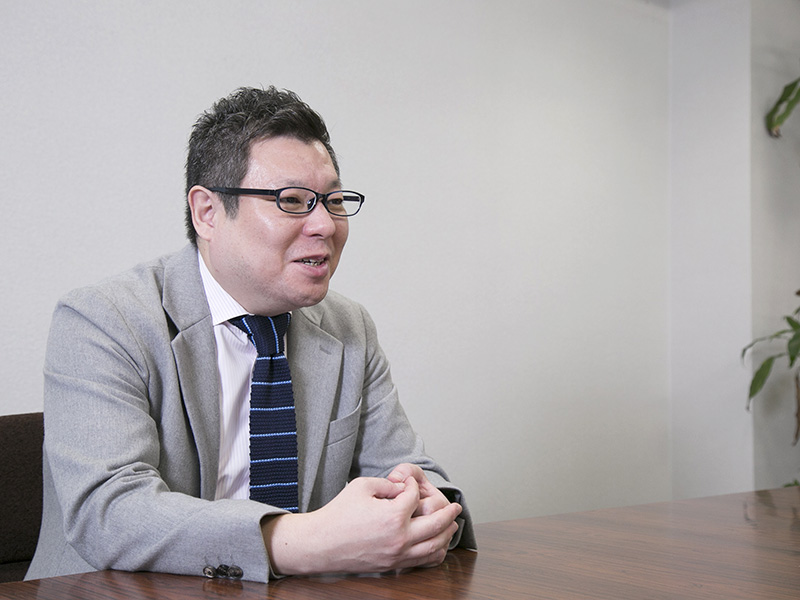
Research into the process of how new hires adapt to working in organisations
At what point do recent graduates start to feel a sense of belonging within an organisation after entering the workforce? What type of person can maintain this feeling long after they have joined the company? What are the factors that determine this?
Professor Tomokazu Takeuchi has quantitatively investigated and analysed the changes in people’s perception and behaviour as they adapt to an organisation. He has published a number of research findings and has received numerous awards for his work from academic societies both in Japan and overseas.
Professor Takeuchi’s research focuses on organisational socialisation, which is the process by which new employees such as new graduates and mid-career hires adapt by learning an organisation’s norms, its values and its culture, through developing an understanding of the role expected of them and by acquiring the skills necessary to execute their work obligations.
His research has shown that “people who highly rate the content of introductory training when they join a company maintain a greater sense of belonging and job satisfaction compared to others”, and that “people who work hard on self-appraisal and put effort during their job search into investigating the industry and organisations (career exploration) tend to sustain a sense of belonging even after joining a company”.
So far, two factors that promote organisational socialisation have been highlighted: the organisation and the individual. Professor Takeuchi points out a third factor: the workplace.
“I believe that the workplace, the actual environment in which new employees conduct their work, plays a major role in their ability to adapt to an organisation and learn their jobs.
“One factor is the relationship new employees have with their bosses. In addition to the personal rapport they have with their superiors, they see and feel the type of leadership shown by their bosses every day at work. If they have a good superior, new employees will adapt well to the workplace and develop their professional skills. However, if they are unfortunate not to have a boss like that, they will find work stressful, and may not be able to make use of their skills, even if they possess great ability.
“Another factor is whether there is someone at work they can talk to when they have a problem. Support from senior colleagues and coworkers is also important in helping new employees adapt to an organisation.”
While Professor Takeuchi’s research topic is organisational socialisation, his specialty is organisational behaviour, which scientifically explains the feelings and behaviour of people working within organisations from a psychological perspective.
“When considering corporate management, individual goals are set by finance, production, sales and other departments based on business strategy. But whether or not those goals are achieved depends on efforts made by each individual employee, regardless of their field of work. The question is how motivated individuals actually feel to take action towards achieving their goals. Motivation, leadership and stress management are important themes in organisational behaviour, and they have many applications in a variety of settings. So I’m pursuing my research with great interest.”
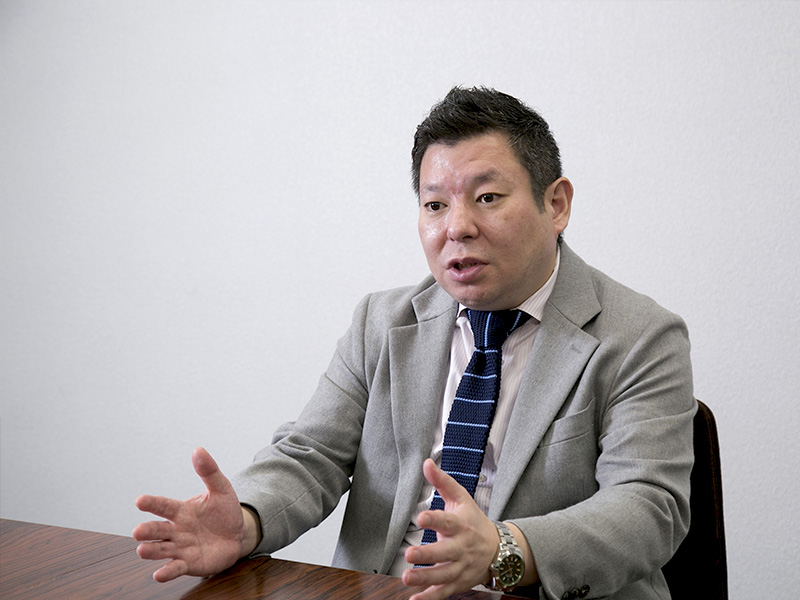
How can we lower early turnover rates among young employees?
According to a survey by the Ministry of Health, Labour and Welfare, approximately 30% of university graduates leave their jobs within three years of starting employment. Furthermore, this figure is not only limited to the unprecedented seller’s market currently witnessed. Over the past 20 years, the early turnover rate has remained roughly constant, even during periods of buyer’s markets and following the Lehman Shock.
Professor Takeuchi says: “While they are a big loss for companies, not all resignations are bad. First, we need to consider the reasons for resignations, and these are very important.”
“I personally don’t think it’s a problem if, for example, someone is highly independent-minded from the outset and wants to gain more corporate experience elsewhere, or they leave because they have already attained a certain level of skill within the company.
“On the other hand, there are those who join a company with the full intention of building their career there, but reality proves a little different, so they are forced to leave without achieving their goals. How might these people have better adapted to the organisation? Was there something they should have done before joining the company, not to mention after doing so? This scenario needs to be considered from the perspective of both the company and the individual concerned.
“Until now, the established dynamic between workers and organisations has been one in which companies take the lead in shaping individuals’ careers on the premise of long-term, stable employment. However, this assumption is now beginning to fade, and the relationship between the two is becoming more short-term and unstable. When individuals must take the initiative in designing their own careers independently, it becomes difficult for organisations to unilaterally determine job assignments, as they have done in the past. Rather than companies taking the lead in dictating the careers of new hires, the question now is how organisations can both provide jobs and foster career development while also engaging thoroughly with individuals’ career hopes and aspirations.
“In some ways, systems can hinder an individual’s creativity and job satisfaction. From the employee’s perspective, what kind of system can help them find meaning in life as well as job satisfaction? This is an extremely important consideration, and if this ultimately leads to positive results for the organisation, wouldn’t that be a good outcome for employers as well? I conduct my research because I feel it is necessary to consider human resource management from the perspective of the individual.”
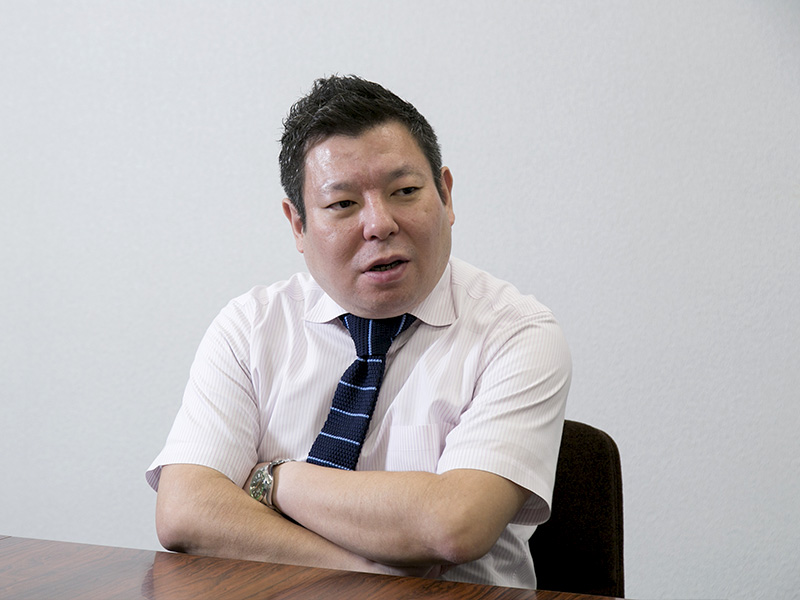
How can we conduct higher-quality research in graduate school?
Professor Takeuchi uses longitudinal research methods in his work. This involves studying the same subjects over and again to reveal changes over time. Although this is time-consuming and costly, it is a useful method that is also employed in developmental psychology. Research surveys have traditionally been conducted on new graduates hired by companies, but recently their supervisors have also been included.
“Increasingly in the research field of organisational behaviour, or organisational socialisation, papers are published only if they are based on solid data. This trend is particularly pronounced overseas. For this reason, we include follow-up surveys not just once, but two or three times. When examining causal relationships, we increase the rigour and value of the data by including not only self-evaluations by recent graduates but also those completed by their supervisors.”
Professor Takeuchi adds: “Even in graduate school, in order to conduct higher-quality research, it is necessary not only to gain in-depth knowledge of the research topic, but to also master research methodologies, in other words to identify what methodologies to employ to clarify issues.”
“I believe that research, no matter how remarkable the findings, will not necessarily be valued highly unless it adheres to a proper methodology. For example, even if an experiment yields groundbreaking results, the findings might be deemed coincidental or could lack credibility if the experimental method does not follow proper procedures.
“Business administration, based on the premise that it is a social science, should be conducted with proper methodology in mind. Otherwise, erroneous results could spread throughout society. There is also the fear that sensational results might be highlighted rather than methodology, and that those results would become widespread.
“While studying research methodology in graduate school, I came across quantitative methodology, which involves distributing questionnaires to numerically grasp people’s levels of awareness and behaviour, or the relationship between awareness and consciousness. Since then, I have continued to conduct empirical research based on this methodology. In a sense, I believe that, as long as the methodology used is solid, research of a certain level can be conducted, even if the topic changes.”
Professor Takeuchi says: “Rather than presenting eye-catching results, it is important to take small, modest steps forward and offer up the facts.”
“What can be learned from the results of my research? And what cannot be learned? Once you understand that, you need to explain your results humbly and sincerely. I don’t want to do sloppy research. By sloppy, I mean research that isn’t based on proper procedures or methodology. When studying management, it’s important to perceive and analyse things scientifically and have a strong desire to uncover problems.
“The mechanisms of human consciousness and behaviour are still shrouded in mystery, and unravelling them is extremely difficult. However, when you formulate a hypothesis based on a theory, conduct research, back it up with data, and prove it, this gives you great joy as a researcher, as you will have unravelled some of that mystery, even if only in part.”
| Date of interview: | 5 October 2018 |
| Interviewer/writer: | Kazuya Endo Office |
| Photography: | Kento Matsumura |
Positions and affiliations reflect information at the time of the interview.
Date of interview: 5 October 2018 / Interviewer/writer: Kazuya Endo Office / Photography: Kento Matsumura
Positions and affiliations reflect information at the time of the interview.