 Interview
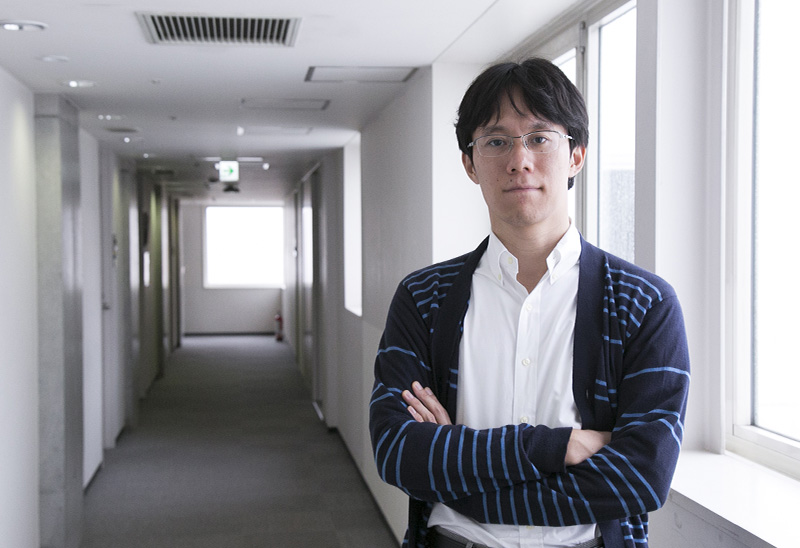
Associate Professor Yasuo Sasaki
- Research Fields
- Decision Science and Game Theory, Systems Science, Management Science
- Profile
- Completed master’s degree at Tokyo Institute of Technology Graduate School of Decision Science and Technology in 2008. Received JSPS Research Fellowship (DC2) in 2009. Became visiting researcher at Helsinki University of Technology Institute for Systems Analysis in 2009. Graduated from doctoral programme at Tokyo Institute of Technology Graduate School of Decision Science and Technology in 2011 (receiving PhD in 2013). Became researcher at Value Research Institute, Inc. (Development Bank of Japan Inc. Group) in 2011. Became Assistant Professor at Japan Advanced Institute of Science and Technology Graduate School of Knowledge Science in 2014. Became lecturer at Japan Advanced Institute of Science and Technology Graduate School of Advanced Science and Technology in 2018. Became Associate Professor at Gakushuin University Faculty of Economics in 2019.
Affiliated academic societies: The Operations Research Society of Japan; Japan Society for Management Information.

In an Age where AI Makes Decisions, How Important is it for Humans to Study Decision-making?
Creating a new model of game theory
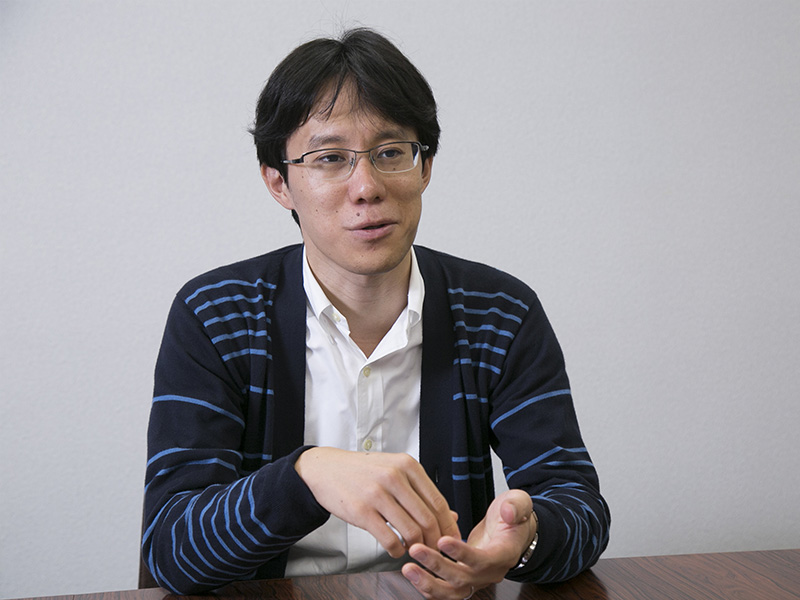
Associate Professor Yasuo Sasaki’s research focuses on decision-making. He has consistently studied the issue of cognitive asymmetry among decision-makers in game theory to clarify the mechanisms by which we make decisions and to identify methods for making better decisions.
One of the research themes to which he has devoted particular focus in recent years is the development of a game theory model that considers ‘asymmetry of awareness’.
Asymmetry of awareness refers to situations in which decision-makers have different perceptions of a set of possibilities. It is a relatively new field of study in the overarching development of game theory and is a topic of research that has been actively discussed over the past decade in top journals on game theory and theoretical economics. And although it has attracted attention overseas, there are apparently very few researchers studying it in Japan.
Yasuo Sasaki received the 2017 Encouragement Award from the Operations Research Society of Japan for his theoretical research on game theory models that consider asymmetry of awareness.
“Typical game theory analyses assume that everyone involved perceives the decision-making situation commonly and acts under the same rules. However, in reality, this is often not the case.
“For example, imagine the owner of a company and a prospective buyer who is considering acquiring it. The owner is aware that the company faces litigation risks, but is unaware of the potential for innovation within the company. The buyer, on the other hand, is aware of the company’s capacity for innovation, but is unaware of the litigation risk. This is the type of situation I am referring to.
“The owner and buyer each have things that they are aware of and things that they are unaware of. Because their perceptions are fundamentally different from the outset, it is not possible to use traditional game theory to address these issues. I am conducting theoretical research to explore whether we can create a new model of game theory that incorporates these more realistic issues.”
Identifying social issues that interest you
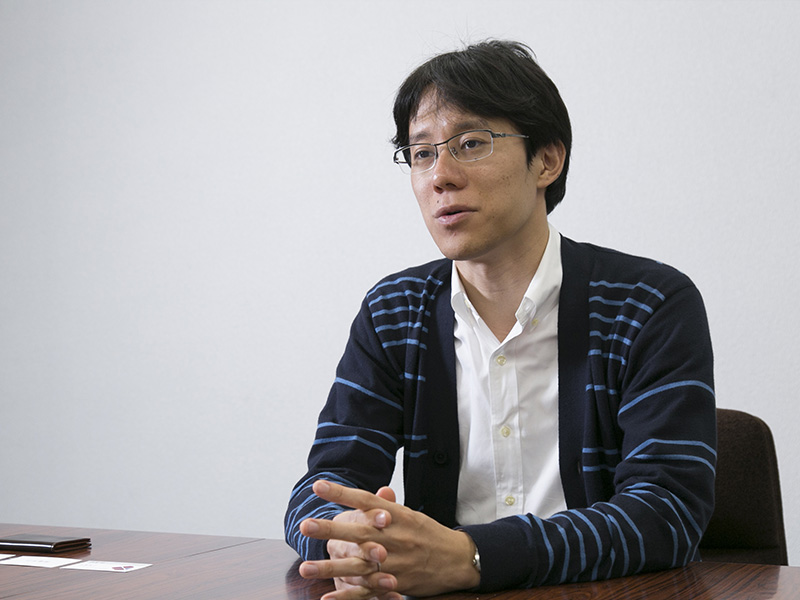
In addition to the asymmetry of awareness, Yasuo Sasaki has published papers, written reports and contributed articles in a variety of fields, including market design, policy evaluation models and knowledge management.
For example, in 2016, when the problem of nursery school waiting lists was becoming a major social issue not only for parents but also for the general public, he published a paper in an overseas journal that examined the issue from the perspective of market design. It all started when he and his wife went to the local ward office to enrol their child in nursery school. As he listened to what they were being told, the issue became clear to him: what rules are used to decide who can enter a nursery school - and are those rules working properly?
“Broadly speaking, I applied game theory – and specifically, matching theory - to a real-world problem. Matching theory is one in which you have a goal you want to achieve, then decide on an algorithm or rules to achieve it, and then you match things up. The same applies to the issue of nursery schools: the question is how to match children who want to attend daycare with the available daycare places.
“In the case of Tokyo’s 23 local wards, the allocation rules - or the methods applied to adjust daycare usage - are made public to a certain extent. When I classified and organised these rules, I found that they were well-designed in terms of fairness and efficiency, but they did not take into account the need to reduce the number of children who cannot be matched, i.e. to reduce the number of children on waiting lists. My paper revealed that, under certain conditions, there is a trade-off between this highly efficient allocation system and reducing the number of children on waiting lists.”
“You have a natural love of thinking, don’t you?” When he was asked that, Yasuo Sasaki smiled.
“My background is in systems science. When I look at social phenomena, whether they be in business, politics or in any other area, they can seem vague and unclear at first glance. I think I’ve become accustomed to first grasping them as systems, then organising the phenomena by modelling the relationships, and then thinking about the problem with a better perspective. There are certainly times when I want to get to the bottom of things.”
When it comes to research guidance, he says that students’ interests are paramount.
“Decision-making can be applied to a wide range of fields, from personal to organisational and societal, so I encourage students to model the problems they want to solve from a management science perspective and proceed from there. I’ll provide advice to ensure that their work is viable as academic research, but I generally encourage graduate students to take the initiative themselves.
“My research methodology primarily uses mathematical models and simulations. It’s not a prerequisite to have a background in programming. The more skills you have, the more options you will have, and the more you can apply them to your research. However, even if you don’t have the background, I will support you if you want to study. There are also research methods that don't require any mathematics at all.”
Current issues can be solved even without historical data
One well known researcher in decision-making is Herbert Simon, who won the Nobel Prize in Economic Sciences. Simon was also a pioneer in AI (artificial intelligence) and unveiled the first artificial intelligence programme in human history at the Dartmouth Conference in 1956.
AI has been evolving rapidly in the 21st century, thanks to the invention of deep learning and the development of big data collection environments. We are now entering an era in which AI, as defined by Simon and others, will make a variety of decisions on our behalf.
It may be a silly question, but as we enter an era in which AI makes decisions, is there still a need for humans to study decision-making?
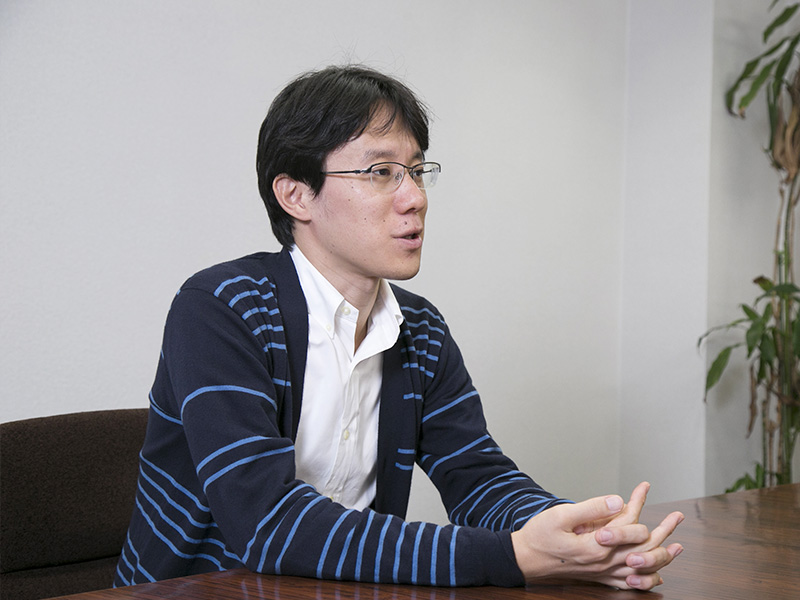
“I believe that the field of decision-making research, including decision-making in one’s own educational career, will become increasingly important in the future. At the present time, AI is essentially machine learning, which allows statistical judgments to be made by learning from large amounts of data. In contrast, the field of decision theory allows us to consider problems we face right now, even without historical data, so that we can make better decisions or to help us comprehend situations.”
“I think there’s a clear distinction between AI and humans. Simple decisions can be left to AI. But, when faced with a once-in-a-lifetime decision such as whom to marry or which company to work for, are we really going follow AI’s advice? We’re not at that stage yet. Only humans can structure such problems and use them to inform our decision-making.”
When considering his future research plans in the short-to-medium term, Yasuo Sasaki says he would like to focus on “the impact of applying awareness asymmetry to specific business situations”.
“For example, there are many studies that use game theory to analyse situations in which another organisation enters a certain company’s market sector. Even if there is uncertainty around whether other organisations will enter its market, the company can at least recognise the possibility. However, we are now living in an age where it is difficult to predict such a possibility.”
At first, no one except Steve Jobs could have imagined that Apple would enter the mobile phone market. Jobs himself did not foresee that Google would also follow suit. And Google, in turn, ignored the existence of Facebook, a closed social networking site for college students. And until just a short time ago, no retailer could have dreamt that Amazon would open a convenience store.
Unforeseen possibilities that existed outside the realms of our imagination would appear out of the blue like dark ships arriving on the shores of our consciousness, docking in the port of our awareness. These days, this is no longer an unusual occurrence.
“There is a high possibility that a company that was previously completely out of our sights because it came from a different industry will suddenly enter the market as a threat to our own business. Numerous conceptual papers have already been published that emphasise the importance of this awareness in future management. I use the term ‘value of awareness’, and I would like to develop a system that fosters proper discussion of it within a mathematical framework.”
| Interviewer/writer: | Kazuya Endo Office |
| Photography: | Takehito Matsumura |
Positions and affiliations reflect information at the time of the interview.
/ Interviewer/writer: Kazuya Endo Office / Photography: Takehito Matsumura
Positions and affiliations reflect information at the time of the interview.