 Interview
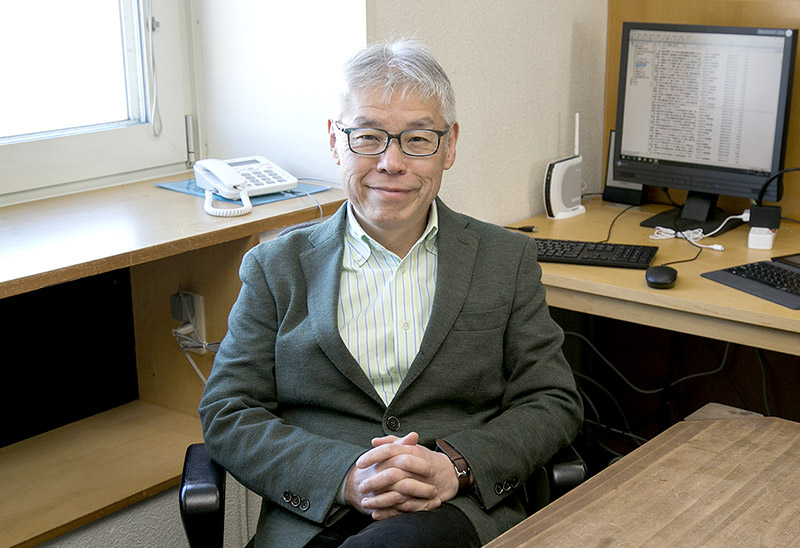
Professor Motohiro Morishima
- Research Fields
- Human Resource Management, Human Resource Management, Organisational Behaviour and Industrial Relations
- Profile
- Graduated from Keio University Faculty of Letters in 1980, majoring in Sociology. Completed doctoral studies at University of Illinois Institute of Industrial and Industrial Relations, USA, in 1986. Received PhD in Human Resource Management. Became assistant professor at Simon Fraser University Faculty of Management, Canada, in 1990. Became associate professor at Keio University Faculty of Policy Management in 1998, then became associate professor and professor at Keio University Graduate School of Management. Became professor at Hitotsubashi University Graduate School of Commerce in 2001. Has occupied current position since 2017. Serves as member of the Ministry of Health, Labour and Welfare’s Labour Policy Council until 2026. Publications include: Introduction to Human Resource Management; The Complex Equation of Human Resources; and Dialogue between Human Resources and Law.

Seeking Human Resources Researchers Who Combine Logic and Experience
Research is not an end in itself; there is importance in what lies beyond research
Professor Motohiro Morishima is an authority in the field of human resource management. The term ‘human resource management’ itself was popularised by his book Introduction to Human Resource Management, published by Nikkei Bunko in 2004. The book has been reprinted many times and has become something of a handbook for corporate human resources departments.
How does a company’s human resource management lead to employee motivation and to results such as enhanced profits, performance, revenue and growth? Professor Morishima has been researching this relationship for the past 30 years. Over the last five or six years, he has been particularly working on the ‘concept of fairness in corporations’.
“In English, it’s called justice. There are several types of justice. For example, there is justice as a system. In a democracy, each person has one vote, and the human rights of individuals are respected. A big question is whether this type of justice is maintained or not in corporate settings.
“One type of justice in a company is systemic justice. For example, when evaluating employees in a human resources department, if the system is sound, person A, person B and person C can all be evaluated fairly based on the same criteria. There is also interactional justice, or interpersonal justice. This is when a manager treats their subordinates with respect, or when they interact with subordinates and colleagues while considering each individual as a human being. I’m interested in the various levels of justice that exist within a company, and how these levels, when well-coordinated, lead to employee motivation.”
So, what kind of perspective does he take in his day-to-day research?
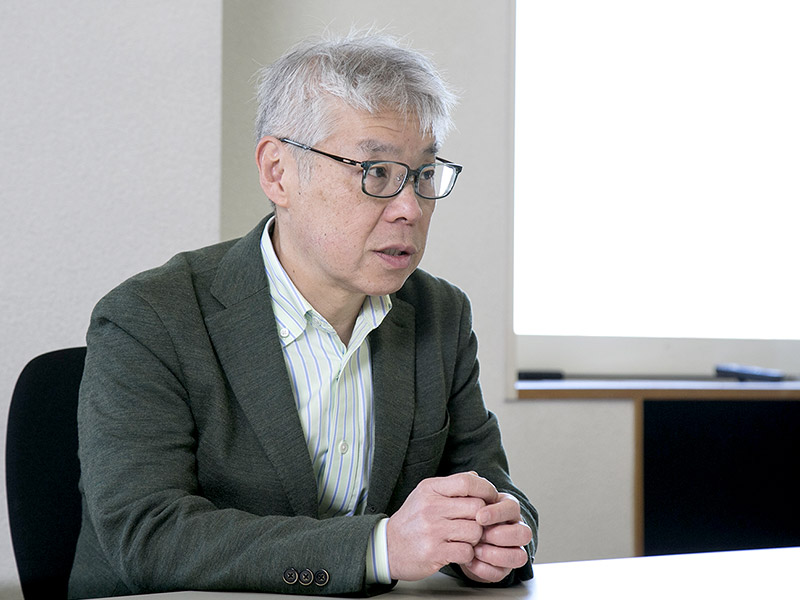
“I think the goals and objectives of research, such as writing a paper, publishing a book, or sharing valuable research results with practitioners, vary from person to person. I believe it’s important for the subjects of my research to achieve a better state in real world. My personal policy as a researcher is that research itself isn’t the goal or purpose; rather, I place the utmost importance on the feasibility, practicality and usefulness of my research. Many researchers study theory, collect data, create hypotheses, analyse, and then surprisingly call it an end. There may not be anything wrong in that. But, for me, the key point ultimately is the betterment of the my research subjects (employees and companies) - and that determines how useful the research is."
What potential research themes will emerge over the coming decade?
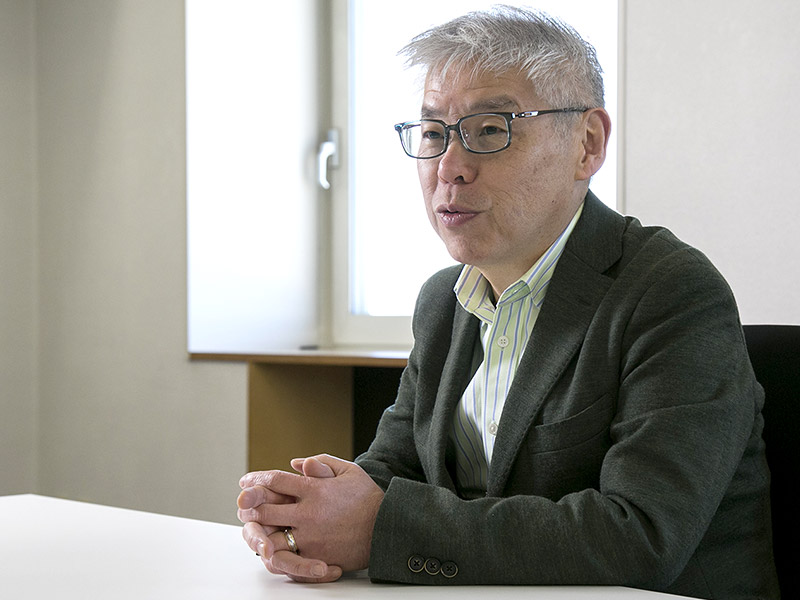
“There are three things you should do in graduate school,” says Professor Morishima. “The first is to learn about past research in your field. When we say field, categories like human resource management and labour-management relations are too broad, so we narrow it down to topics like fairness and motivation, or, in terms of systems, merit-based pay and evaluation systems. You should first learn what research has already revealed and what theories already exist.
“Next comes methodology. Since specific subjects are involved, you learn how to analyse them. It’s important to be able to use both statistical and qualitative methods.
“Finally, it’s about using that knowledge gained from analyses to advance your own understanding of the world you are interested in. But don’t think big. The key is whether you can make just one small addition to the body of knowledge that has been built up to date. I will teach knowledge and methods, and will then work with students to think about how they can take the next step for themselves.”
It’s perhaps because graduate students are in tune with their times that the research topics they choose “often synchronise with trends in society”. Currently, their research focuses on topics such as ‘promoting women’s participation in the workforce’, ‘work-life balance’ and ‘internal fairness’. Whereas about ten years ago there was a lot of research on the issue of ‘irregular workers’. And about twenty years ago, research that focused on performance-based evaluation and compensation ’ was prevalent.
“I do wish they would research more basic things as well,” Professor Morishima says with a wry smile. So, what does the professor foresee in terms of emerging research over the next ten years?
“The number of people working in non-employment or contract work formats will continue to increase, and companies will likely see a demand for this type of work. In order to make a living from their own skills, workers will have no choice but to hone in and demonstrate their expertise in a very narrow field. Companies will also want to reduce health insurance and workers’ compensation insurance premiums, so they will begin to hire the talent they need only when they need it. In this climate, I believe the ‘employment model’ of working will gradually disappear.
“When that time comes, the key issue will be how we handle, for example, motivation and evaluation. In the past, it was possible to keep employing employees who worked hard but weren’t productive over the long term, or to take a gamble on their future growth potential. However, when it comes to outsourcing, if you don’t produce results, you’ll get a zero evaluation and let go by employers. This means Japan’s current evaluation system must change.
“Also in terms of training, companies currently hire and train freshly hired university graduates, but this will no longer be necessary when outsourcing becomes a norm. Furthermore, once a task is assigned, employees must be in a position to immediately carry out the designated task. I’m not saying that the training function will disappear from companies entirely, but I expect it will change significantly. As work practices and labour procurement become increasingly temporary and short-term, it’s natural that the world of human resources will dramatically change, and I believe that research of this type will become mainstream.”
What are essential qualities needed to become an excellent researcher?
Professor Morishima is active in a wide range of areas, from being invited to be a facilitator and panellist at human resources events and seminars to serving as chair of the Equal Pay for Equal Work subcommittee of the government’s labour policy council, as part of the government’s working practice reform. He is also proactive in inviting human resource professionals he has made contacts with through his various activities to speak at his graduate seminars, including members of human resources departments from major companies and from IT startups. This is a valuable experience for graduate students. He says that this is “to help them gain relevant practitioner knowledge, which he called local knowledge”.
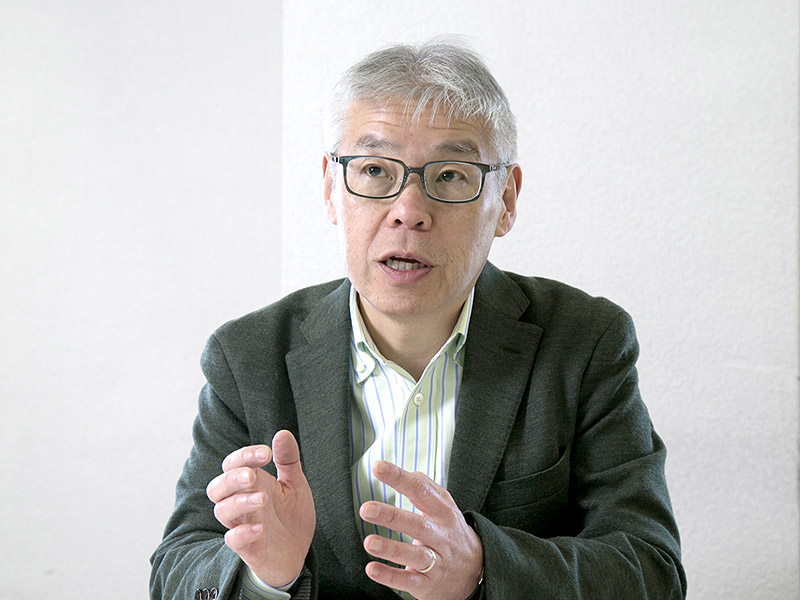
“I believe that human resources research is impossible without some sort of hands-on knowledge of the corporate world. For example, when discussing leadership theory, if you say, ‘There are some bad bosses out there, aren’t there?’, then someone with actual knowledge might respond, ‘Oh, that person sound like a boss I have,” or ‘I’ve known a few people like that when I worked in a company”. They might begin to think about how this phenomenon exists in the real world, and what good leadership and bad leadership is, linking it to their own experiences. On the other hand, if you can’t visualise such a situation yourself, the criteria you use for distinguishing good and bad bosses will be solely academic, and your analysis will likely be biased or impractical.”
Professor Morishima says that “there is a possibility that two types of people will come” to his graduate school lab, and he wishes to convey “a message to each of them.”
“One type is those who already have a certain amount of work experience and want to continue their studies at graduate school. What I would like to say to these people is that work is a product of compromise, while theory is that of logic. Both are necessary, but I would ask those coming from the workplace to temporarily put aside the common sense and assumptions you have acquired in real world. You won’t become a good scholar unless you step out of that world.
“To add to that, I say that work experience will be extremely important in the future, as I mentioned earlier. After you have diligently studied theory and pure research, I want you to retrieve your precious work experience from the cabinet where you stored it away and reexamine it from a theoretical perspective. Facts are superficial things and are not absolute truths. I would like you to clarify the mechanisms behind how certain phenomena emerge. Therefore, in order to research them, you need to learn the straightforward academic world of theory, methodology and logical argument.”
In fact, many of Professor Morishima’s graduate students have had experience as corporate soldiers. For example, one of his students, Tomoyuki Shimanuki, who is currently a professor at Hitotsubashi University, worked in the human resources department of a general trading company for six years before studying under Professor Morishima. However, it seems that suitable work experience is not limited to human resources departments. “What’s important is whether you are familiar with companies’ real workplaces,” he says.
“And the other type,” Professor Morishima continues, “is students coming directly from undergraduate work, who should acquire as quickly as possible a knowledge of how people move around within companies, even if it’s only via part-time work experience. In other words, obtain a miniature version of the understanding of the workplace that employees have. Without that hands-on experience, they’ll come up with ideas that would be very strange from an actual human resources practitioners’ perspective. In any case, if you cannot combine both logic and experience of work, you won’t be able to become a good human resources researcher.”
| Date of interview: | 25 January 2018 |
| Interviewer/writer: | Kazuya Endo Office |
| Photography: | Kento Matsumura |
Positions and affiliations reflect information at the time of the interview.
Date of interview: 25 January 2018 / Interviewer/writer: Kazuya Endo Office / Photography: Kento Matsumura
Positions and affiliations reflect information at the time of the interview.