
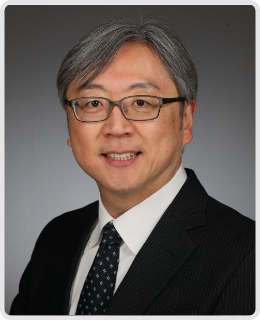
March 1999: Graduated, Faculty of Economics, Keio University
March 2001: Completed the Master’s Program, Graduate School of Economics, Keio University
July 2007: Completed the Ph.D. Program, Department of Economics, University of Minnesota (USA); received Ph.D.
August 2007–May 2009: Visiting Assistant Professor, Department of Economics, University at Buffalo, The State University of New York (USA)
June 2009–September 2011: Assistant Professor, Doctoral Program in Economics, Graduate School of Humanities and Social Sciences, University of Tsukuba
October 2011–January 2012: Assistant Professor, Faculty of Humanities and Social Sciences, University of Tsukuba
February 2012–March 2026: Associate Professor, Faculty of Humanities and Social Sciences, University of Tsukuba
April 2026–present: Associate Professor, Department of Economics, Faculty of Economics, Gakushuin University
E-mail:
Office:1108 East Building No.2
Macroeconomics, International trade
- Atolia, Manoj and Yoshinori Kurokawa. “Entry Costs, Task Variety, and Skill Flexibility: A Simple Theory of (Top) Income Skewness.” The B.E. Journal of Macroeconomics, 2021, 21(1), pp. 97–124.
- Kurokawa, Yoshinori; Pang, Jiaren and Yao Tang. “Exchange Rate Regimes and Wage Comovements in a Ricardian Model with Money.” Journal of International Economics, 2016, 102, pp. 96–109.
- Kurokawa, Yoshinori. “Variety–Skill Complementarity: A Simple Resolution of the Trade–Wage Inequality Anomaly.” Economic Theory, 2011, 46(2), pp. 297–325.
Lectures
The main courses I teach are Macroeconomics, Japanese Economy II, and Japanese Economy (Advanced Course I and II).
In the first semester of Macroeconomics, I first explain basic concepts such as GDP. Next, we analyze how GDP and other macroeconomic indicators are determined, and what effects macroeconomic policies have. In doing so, we use two theoretical frameworks: the classical model (a long-run model) and the Keynesian model (a short-run model). In the second semester, we develop spatial extensions (exchange rates) and intertemporal extensions (economic growth) of the models studied in the first semester, as well as their microeconomic foundations (theories of consumption and investment). Finally, we apply the theories studied so far and attempt to explain data on the postwar Japanese economy.
The main objective of Japanese Economy II and Japanese Economy (Advanced Course I and II) is to analyze basic historical facts about the Japanese economy both empirically and theoretically. In many cases, this analysis involves comparison with the United States. Furthermore, although Japanese is used for explanations in the lectures, English texts and slides are used, and students also learn how certain terms are expressed in English—for example, 高度成長 is expressed as “rapid growth.” In Japanese Economy II, I lecture on the theoretical background (an overview of macroeconomics and microeconomics), the historical background, and macroeconomic and economy-wide topics (such as economic growth, business cycles, monetary and fiscal policy, and financial markets). As a continuation of Japanese Economy II, Japanese Economy (Advanced Course I) covers microeconomic and sectoral topics (such as industrial structure and policy, the labor market, and saving and investment), while Japanese Economy (Advanced Course II) covers topics in international economics (such as international trade and international finance).
Seminars
The Kurokawa Seminar (sophomore through senior years) covers macroeconomics, microeconomics, and international economics, and begins in earnest with the junior-year seminar. As preparation, the sophomore-year seminar involves reading and discussing texts on macroeconomics and microeconomics. The junior- and senior-year seminars are conducted jointly. Junior-year students read and discuss texts on the basic theories of international economics and their applications, and also prepare a group paper to present at an inter-seminar meeting with Keio University, The University of Tokyo, and the Faculty of International Social Sciences, Gakushuin University. Senior-year students write a senior thesis. The junior- and senior-year seminars also include a seminar retreat.
My main research areas are macroeconomics and international trade.
To date, I have conducted theoretical, quantitative, and empirical analyses on the following questions: (1) Does international trade widen wage inequality? (2) How do exchange rate regimes affect wage co-movement among trading countries? (3) Can factor intensity within the same industry—the capital-labor ratio or the skilled-unskilled labor ratio—be reversed across countries or regions? (4) Do exporting firms respond to both tariffs and exchange rates? (5) What effects does international trade have on industry-level output? (6) How do entry policies affect changes in income distribution? (7) Are intermediate goods and skills complementary? (8) Which is better for firm profits: job rotation (the Japanese model) or specialization (the American model)?
At present, I am analyzing theoretically, quantitatively, and empirically on the following questions: (1) Can global value chains explain the puzzle of “while manufacturing value added is declining in many advanced countries, exports are increasing”? (2) To what extent do domestic and export entry costs affect the wage gap between workers with flexible skills and those without them? (3) To what extent does an increase in intermediate goods affect the widening of wage inequality through intermediate goods–skill complementarity? (4) Are there problems related to efficiency and incentives in current Net Zero Energy Building (ZEB) policies?
This is what I always remind myself of, but I encourage you all to take care not to lose sight of what your priorities are at any given moment. As long as you are doing the minimum that you need to do for yourself, everything else does not have to be perfect.
Also, if possible, I recommend studying abroad, even for a short period. This is because it can be truly liberating to be simply yourself, known only as “so-and-so from Japan.”