
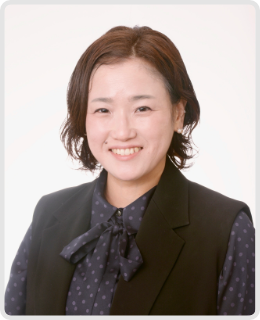
2015–2017: Master’s Course, Graduate School of Environmental Studies, Nagoya University; Master’s Degree in Psychology
2017–2020: Doctoral Course, Graduate School of Informatics, Nagoya University; Ph.D.
2018–2020: Research Fellowships for Young Scientists (DC2), Japan Society for the Promotion of Science
2020–2023: Assistant Professor, School of Management, Chukyo University
2023–2025: Lecturer, School of Management, Chukyo University
2025–2026: Associate Professor, School of Management, Chukyo University
2026–present: Associate Professor, Department of Management, Faculty of Economics, Gakushuin University
E-mail:
Consumer Behavior, Consumer Psychology, Cognitive Psychology
[Major Peer-Reviewed Papers]
- Iseki, S., Mase, T., & Kitagami, S. (2025). Perception of luxury and product quality in package design: Examining the effects of white space, typeface, and visual texture. Journal of Sensory Studies, 40, e70026.
- Motoki, K., Iseki, S., & Pathak, A. (2025). Sounds cute: Exploring the role of sound reduplication in brand names. International Journal of Research in Marketing, 42, 4, 1305-1322.
- Motoki, K., S. Iseki, and A. Pathak. (2026). Sounds Sweet: Sound Reduplication in Brand Names Enhances Sweet Taste Expectations. Psychology & Marketing, e70110.
- Iseki, S., Sasaki, K., & Kitagami, S. (2022). Development of a Japanese version of the Psychological Ownership Scale. PeerJ, 10, e13063.
- Iseki, S., Motoki, K., Sakata, R., & Kitagami, S. (2021). How semantically labeled scent-gender associations influence the evaluations of scent and texture. Frontiers in Psychology, 12, 713329
- Motoki K, & Iseki S. (2024). Diversity in gender and age, but not in race, enhances food purchase intentions in Japan. Food Quality and Preference, 121, 105263.
- Motoki K, & Iseki S. (2022). Evaluating replicability of ten influential research on sensory marketing. Frontiers in Communication, 7, 1048896.
- Iseki, S., & Kitagami, S. (2023). How manipulation of control influences desire for control and psychological ownership. Advances in consumer studies, 29, 27-38.
- Iseki, S., & Kitagami, S. (2019). Effects of individual differences in desire for control on willingness to pay for a customizable product. The Japanese journal of psychonomic science, 38, 56-62.
Japan Association for Consumer Studies, The Japanese Society for Cognitive Psychology, The Japanese Psychological Association, Japan Society of Kansei Engineering, Japan Marketing Academy, The Japan Society of Marketing and Distribution, Japan Academy of Advertising
1. Lectures for Undergraduate Students
Almost every day, we engage in the act of exchanging money for products and services. In the process leading up to those actions, we make decisions while processing vast amounts of information, storing it in memory, and making inferences. In other words, to understand consumer behavior, it is essential to understand how the human mind works. In the Consumer Behavior course, I introduce a wide range of findings from psychology and consumer behavior research, using specific examples. I aim to help students understand the essence of consumer behavior by analyzing and considering it in relation to their own everyday behavior and the marketing activities of companies. Learning about the psychological processes behind consumer preferences and decision-making not only provides an opportunity to gain a renewed understanding of oneself, but is also extremely important for you all as you go on to play active roles as business professionals.
2. [Seminars]
The main project in the seminars is to conduct empirical research on consumer psychology and consumer behavior. To that end, we first build a solid foundation. Through the process of reading research papers together, conducting replication experiments of previous studies, statistically analyzing data, and interpreting results, students gradually build their knowledge and experience. Then, over the course of a year, students conduct empirical research on research topics they have developed themselves. Students select the academic conference at which they will present their research findings, choosing from among such organizations as the Japan Marketing Academy, the Japanese Society for Cognitive Psychology, and the Japan Society of Kansei Engineering. In addition, we hold the Consumer Psychology Seminar Research Presentation Meeting jointly with seminars at other universities specializing in consumer psychology, such as Waseda University and Keio University, deepening academic exchange beyond university boundaries. At first glance, these research projects may seem modest and difficult. However, the excitement of obtaining results that support your own hypotheses and the satisfaction of conveying the appeal of your research through a presentation that you have developed logically through repeated trial and error will likely become an exciting experience that is difficult to find elsewhere.
I seek to clarify the psychological processes underlying various forms of consumer behavior. The research areas I am particularly interested in are sensory marketing, package design, and consumer motivation. To date, I have clarified the factors and processes through which consumers develop a sense of psychological ownership of products and services. I also examine, from a psychological perspective, how design elements such as tactile qualities, white-space size, and cuteness affect consumer responses. Recently, I have also been conducting research on tourism.
After graduating from the Faculty of Economics, I gained practical experience before entering graduate school. My decision to enter graduate school was prompted by my experience working in retail, where I realized that my knowledge of psychology was far too limited. I then became deeply drawn to the appeal of consumer behavior research based on psychology and chose the path of becoming a university faculty member, where I could pursue both research and teaching.
Now, through classes and seminars, I hope that you will discover the appeal of consumer psychology and it will become an opportunity to deepen your learning at university. A university is a place that provides the time and environment to pursue anything thoroughly, no matter how small it may seem, if you wish to explore it more deeply. I hope you will gain learning that allows you to say with confidence, “This is what I explored in depth at university,” and then go on to make your way in society.
The happiest moments in this work are when graduates get in touch with me and I can be present as they laugh over lighthearted conversations and fondly reminisce about their student days. For me as well, the memories of the friends I spent time with during my university days are irreplaceable; even now, whenever we meet, I can instantly return to the feelings of that time. I am truly happy to feel that my graduates, too, have found such friends. I hope that you, too, will make the most of your university years, enjoying your youth with lifelong friends.