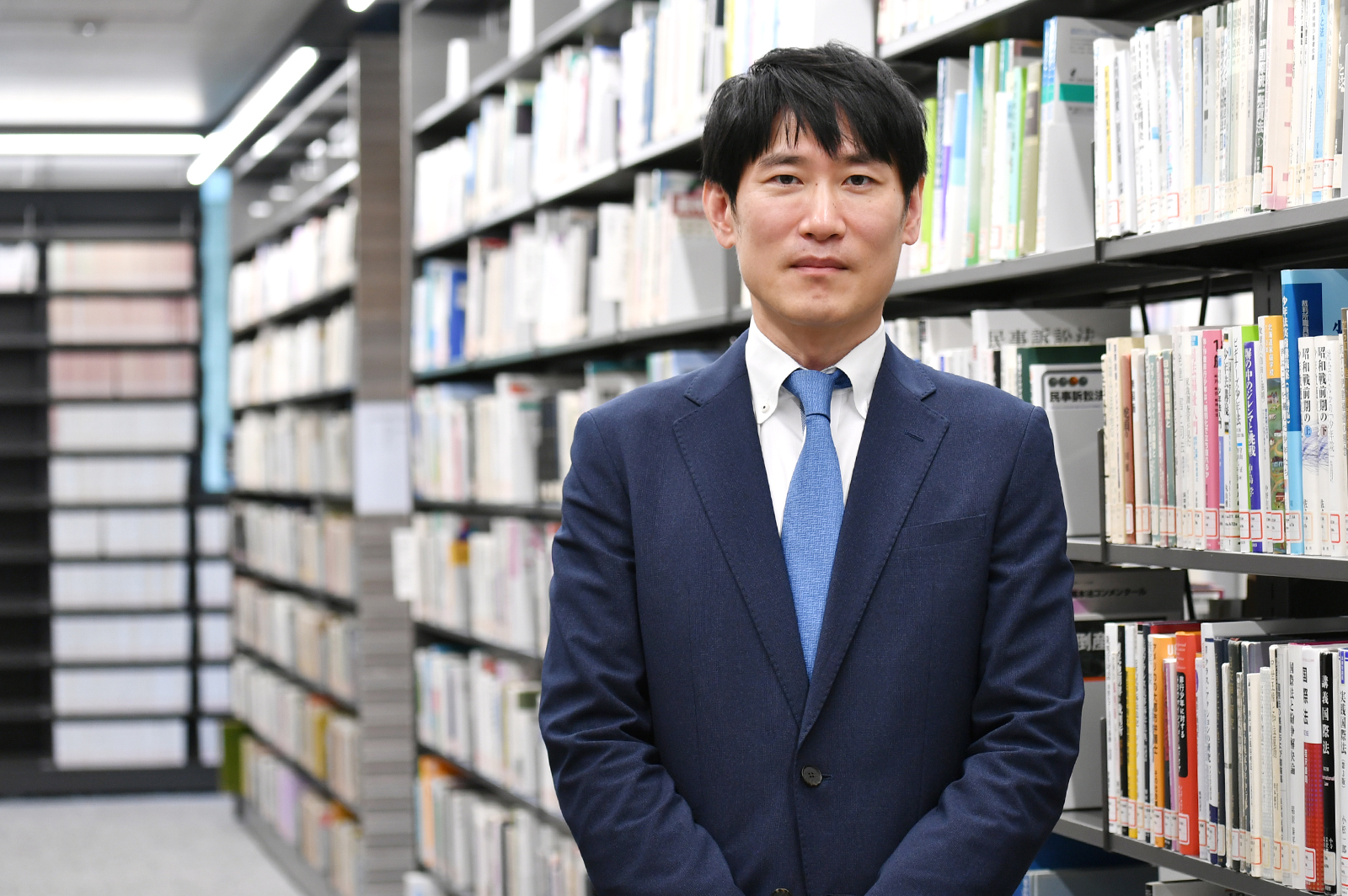
 Interview
Professor Katsushi Suzuki
- Research Fields
- Corporate Finance, Corporate Governance
- Profile
- Graduated from Meiji University School of Commerce in 2000. Completed doctoral studies at Hitotsubashi University Graduate School of Commerce in 2005. Became full-time lecturer at Tokyo University of Science School of Business Administration in 2005. Became associate professor at Kobe University Graduate School of Business Administration in 2010. Became visiting researcher at University of Washington in 2013. Became associate professor at Hitotsubashi University Graduate School of International Corporate Strategy (renamed the Graduate School of Business Administration in 2018 due to organisational changes). Became professor at Hitotsubashi University Graduate School of Business Administration in 2019. Became professor at Gakushuin University Faculty of Economics in April 2024.

The joy of writing papers: a first foray into teaching
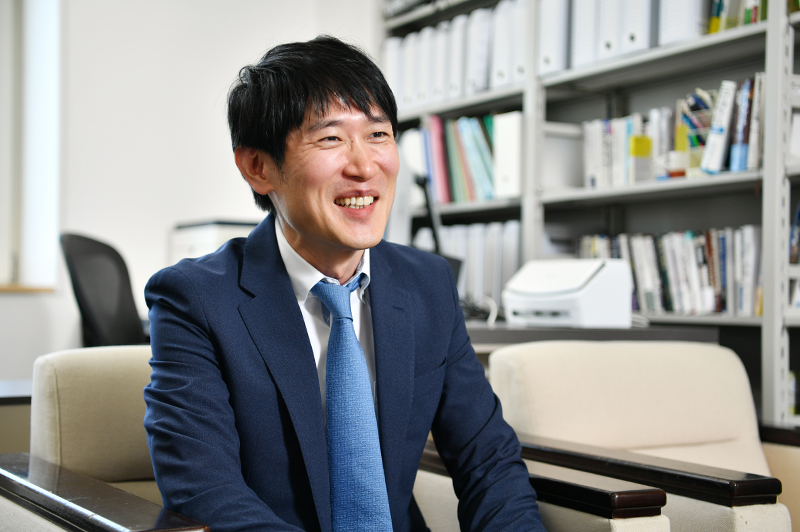
“When I thought about what I wanted from my life, I realised that being a university professor might bring the fulfilment I yearned for.”
Professor Katsushi Suzuki graduated from university in 2000, right in the middle of the ‘Employment Ice Age’. He had joined a seminar on finance because he thought it would provide him with a stable job in the industry, but his chances of finding employment at a financial institution were slim due to limitations that were in place on hiring new graduates. So, what should he do with his life? Having reached a crossroads, Professor Suzuki reconsidered his options and ultimately chose the path of university teaching.
“What we need in life is a certain amount of status, money and time. I was attending a lecture wondering what kind of job would fulfil those needs, when I realised that being a professor speaking in front of a classroom might be ideal for me.”
Professor Suzuki decided to go on to graduate school and enrolled at the Hitotsubashi University Graduate School of Commerce. He completed his doctoral studies and became a lecturer at the Tokyo University of Science School of Management. Professor Suzuki had achieved his ideal career in the shortest possible time. However, as he spent his days teaching and conducting research, he experienced an unexpected change of heart.
“It was only until after I became a university professor that I began to enjoy writing papers. At graduate school, my focus on writing papers had been purely for the purposes of getting a job, but after becoming a professor I was able to research and write papers about things that I loved. I never realised how much fun it would be to be able to write papers about what I wanted, in the way that I wanted.”
Professor Suzuki turned his focus toward the subject of shareholder benefits, which have spread rapidly in Japan since 2000. At the time, only about 10% of listed companies offered shareholder benefits, but the trend expanded quickly after the collapse of the bubble economy. In recent years, the number of listed companies offering them has grown to about 40%.
Why the sudden trend? Professor Suzuki points to “the strengthening of BIS regulations” as one of the main factors. BIS regulations are internationally unified standards that prohibit banks conducting international transactions from holding stocks in excess of their capital adequacy ratio. Following the collapse of the bubble, banks holding stocks whose prices had fallen sharply began to sell them in accordance with BIS regulations, but at the time there were insufficient wealthy investors to buy up the newly available stocks. Professor Suzuki explains that this is why Japanese-style shareholder benefits that bundled company products and services became more popular in order to encourage individual investors to enter the market.
“At the time, the government implemented measures such as establishing a purchase agency and lifting a ban on share buybacks, but these moves were no match for the quantity of stock that banks were selling. That’s when they turned their attention to individual investors in Japan. Foreign investors entered the market more visibly from the early 2000s, but from the perspective of Japanese companies, it’s convenient to have shareholders who will hold on to their shares without interfering too much with management. I think this is why shareholder benefits, which can provide services to individual investors, have become so popular.”
The introduction of shareholder benefits has also had a major impact on the structure of the stock market. Professor Suzuki highlights that the biggest impact on the stock market is ‘improved stock liquidity’:
“Research has shown that shareholder benefits increase the liquidity of stocks and contribute to rising stock prices. As more individual investors purchase stock - regardless of its price - for the purpose of receiving share benefits, stocks become easier to buy and sell at any time. This, in turn, stimulates the market. Benefits which were previously thought to favour only individual investors in fact aid institutional investors as well by stimulating the market.”
Professor Suzuki compiled his research on stock benefits into a paper in 2006. After about 15 years, it was published in 2021 in the internationally acclaimed American journal, The Review of Financial Studies.
“It took over 10 years from when I started in 2005 for my research to be published internationally. Because it was a completely new field of research, it took a long time to gain recognition, and it was certainly difficult. However, I continued doing the research I wanted to do in the way I wanted to do it, so it wasn’t painful. Conducting research is fascinating, after all.”

Unravelling the role of the CEO, a figure with the fate of the company in their hands
Professor Suzuki is also conducting research on the impact CEOs have on corporate activities. This research, which won the 6th GPIF Finance Awards in March 2024, examines the impact of interpersonal relationships on the selection of CEOs and their behaviour. It quantitatively analyses how corporate trends change due to so-called ‘ties’.
Professor Suzuki cites the relationship between a former CEO and his or her successor as an example of how interpersonal relationships affect CEO selection. The results of the study suggest, in short, that an outgoing CEO is more likely to choose someone with whom he or she has social ties.
“Many listed Japanese companies typically select their next president from among the directors sitting below the president. We found that the person selected as the next president often has some kind of social connection with his or her predecessor. These connections may only be weak, such as attending the same university, coming from the same hometown, or sharing the same workplace. In other words, people with casual friendships are more likely to be chosen.”
“These results do not allow us to determine whether appointing someone with social connections is the result of favouritism (choosing someone you like, regardless of their ability) or because they were the most capable person for the job. So, in the next study, we investigated the impact that people selected for social ties had on a company.
“Our results showed that new CEOs who had social ties with the previous CEO did not change strategy, even when they needed to when the company was in a tailspin. We can infer from these findings that a new CEO with strong ties was unable to break the legacy left by the previous CEO when it was prudent to do so. This suggests that the person selected may have been chosen based on favouritism or may have strong ties to the company.
“Furthermore, selecting a new CEO based on social ties can affect the next generation. A CEO selected because of social connections will also draw on their own ties when choosing their successor, meaning the relationship between two CEOs is passed down from generation to generation. This will perpetually prevent the company from changing its ways, and it could suffer significant losses.
“Conversely, research has shown that CEOs selected without social ties are likely to choose their successor without drawing from amongst their social connections. Companies that do prioritise relationships may be faced with a dilemma: they want to instigate change but cannot. In order to revitalise Japanese companies, I believe each organisation needs to carefully consider and adapt its systems, and I would like to continue conducting research that will help with this."
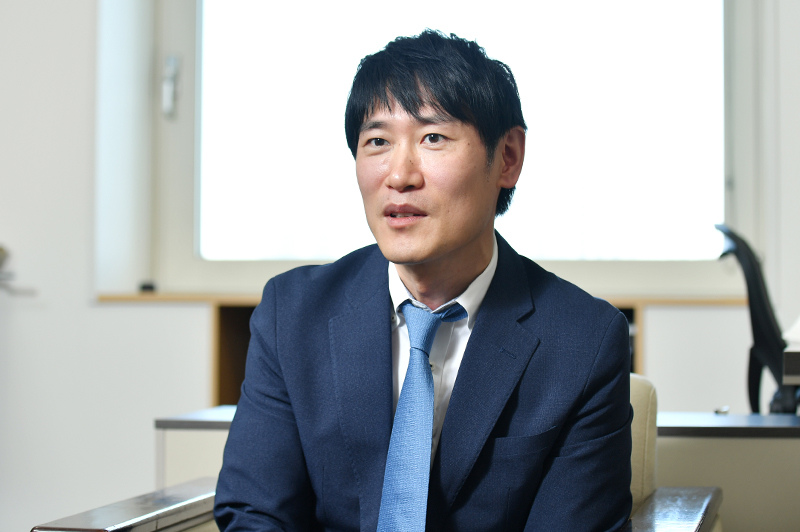
Research is like climbing a mountain: the joy only comes after the pain
Professor Suzuki became a professor at Gakushuin University in April 2024. With an impressive list of accomplishments already under his belt, why did he choose Gakushuin as his new research environment?
“Previously, in addition to lecturing and research, I also worked as a corporate training and seminar instructor for large companies. Thinking back, however, I realise that research was always what I really wanted to do. I want to continue pursuing my research in line with my interests. I have high hopes that Gakushuin’s quiet and tranquil environment will allow me to create the research conditions I desire.”
It's only been a few months since Professor Suzuki took up his position. Although he hasn’t spent much time at Gakushuin, he’s already sensed something special about the students there.
“When I saw the students at Gakushuin, I was impressed by how serious and dedicated to their studies they were. There are many calm students, and I feel it’s an ideal learning environment.”
Professor Suzuki, who won’t have his own laboratory until 2025, wants others to know the joy of research just as he has done. He says that it’s not just a long and arduous journey, but that there is a joy that can only be experienced at the end.
“I think of research as being like climbing a mountain. It’s probably tough at first, and few people find it enjoyable from the start. But as you take each step forward, the scenery changes and you start to feel joy. Until, at the summit, all that’s left is a sense of exhilaration and excitement. Even if the journey up the mountain is tough, it’s rewarding if you keep going.
“I would like to do research with people who understand both the challenges and the joys. I hope to read papers together, discuss things together and tackle creative endeavours together. Several of my former students have become university professors. I think they’ve all seen beyond the difficulties of research. I look forward to meeting people at Gakushuin who will share the challenges of research with me. Research is so much fun that it can change your life.”
| Date of interview: | 31 May 2024 |
| Interviewer/writer: | Hiroyuki Tezuka |
Positions and affiliations reflect information at the time of the interview.
Date of interview: 31 May 2024 / Interviewer/writer: Hiroyuki Tezuka
Positions and affiliations reflect information at the time of the interview.