 Contact
 Access
 Japanese
 Search




Workshop on traditional Japanese culture: dyeing
11 Dec 2025
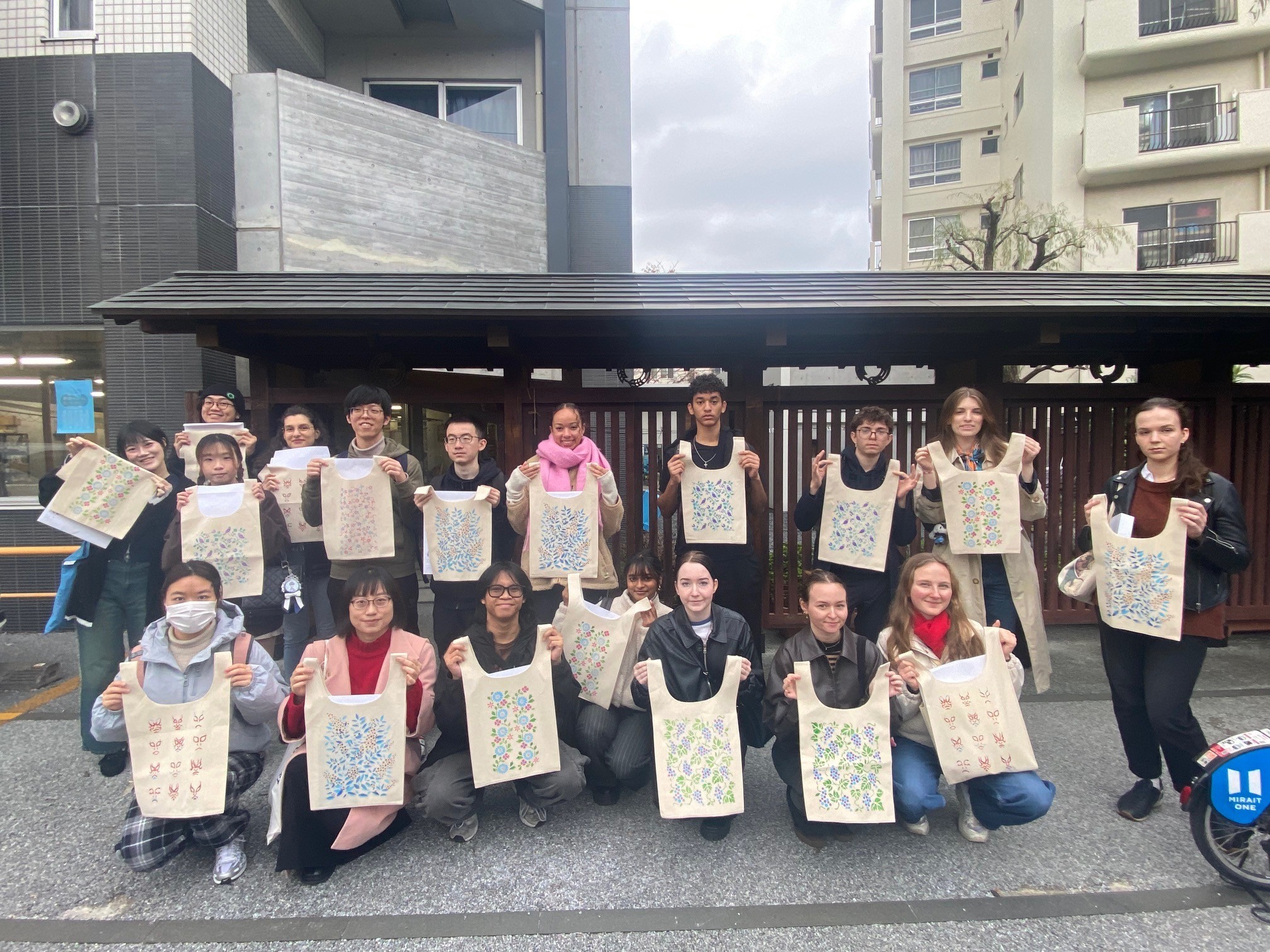
With the support of Kasumi Kaikan, a general incorporated association, the International Centre provides international students with opportunities to appreciate traditional Japanese culture. On November 29, 2025, the Centre led a group of 18 international students, including two from Gakushuin Boys' Senior High School, to participate in a dyeing workshop held at a studio in the nearby Ochiai district in Tokyo.
The name of the area, Ochiai, means "where two rivers, Kanda River and Myoshoji River, meet." As suggested by the name, the district used to be a village blessed with abundant clear water. Many dyers moved to the village in the Meiji period, searching for clear water essential for their work. This way, the village of dyeing was developed.
With all the participants in the studio, the workshop started. First of all, they were briefed on the dyeing procedures.
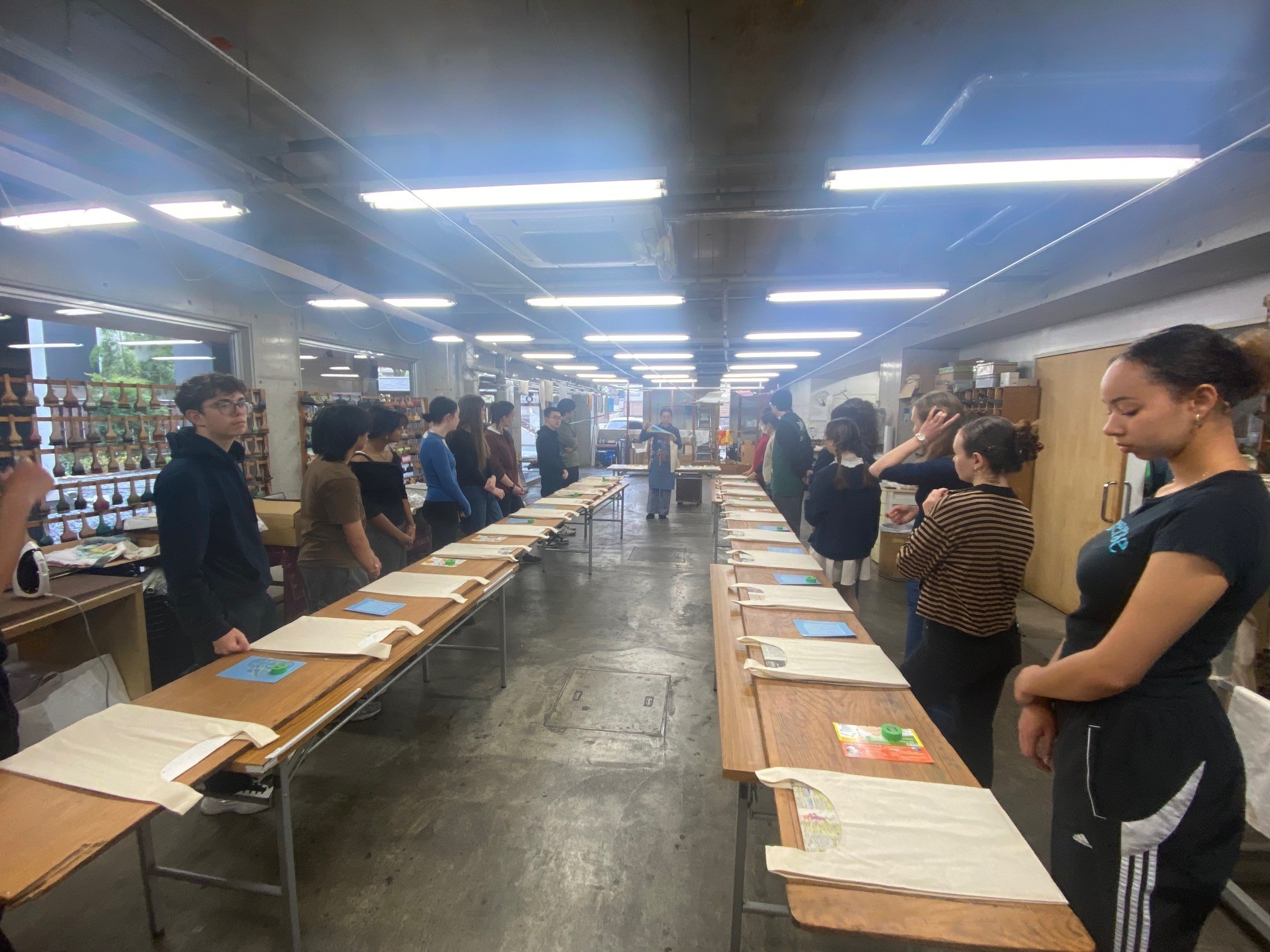
This time, they would learn how to dye a shopping bag with a stencil. Each of the students applied different colorants over a stencil of his/her choice.
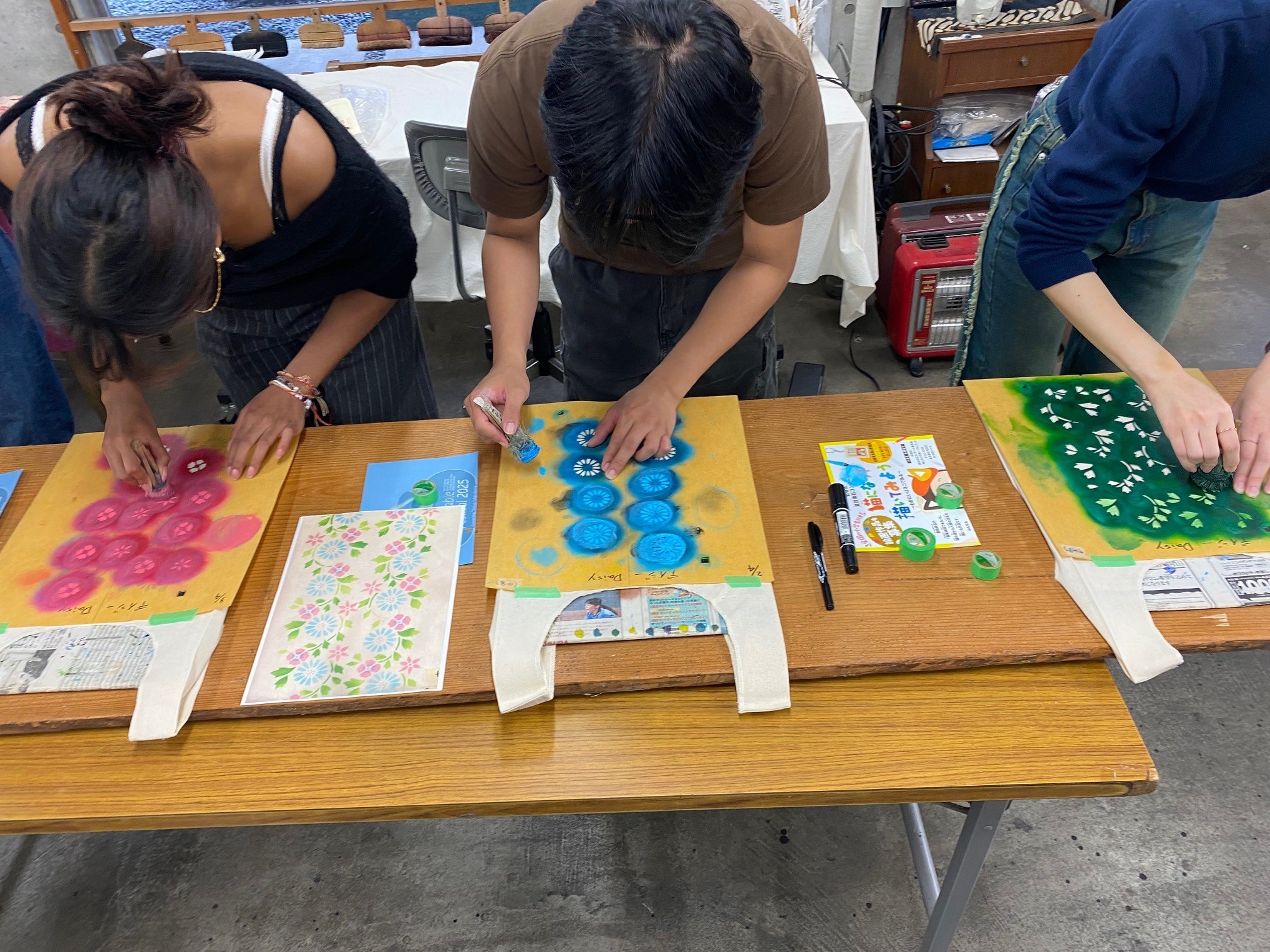
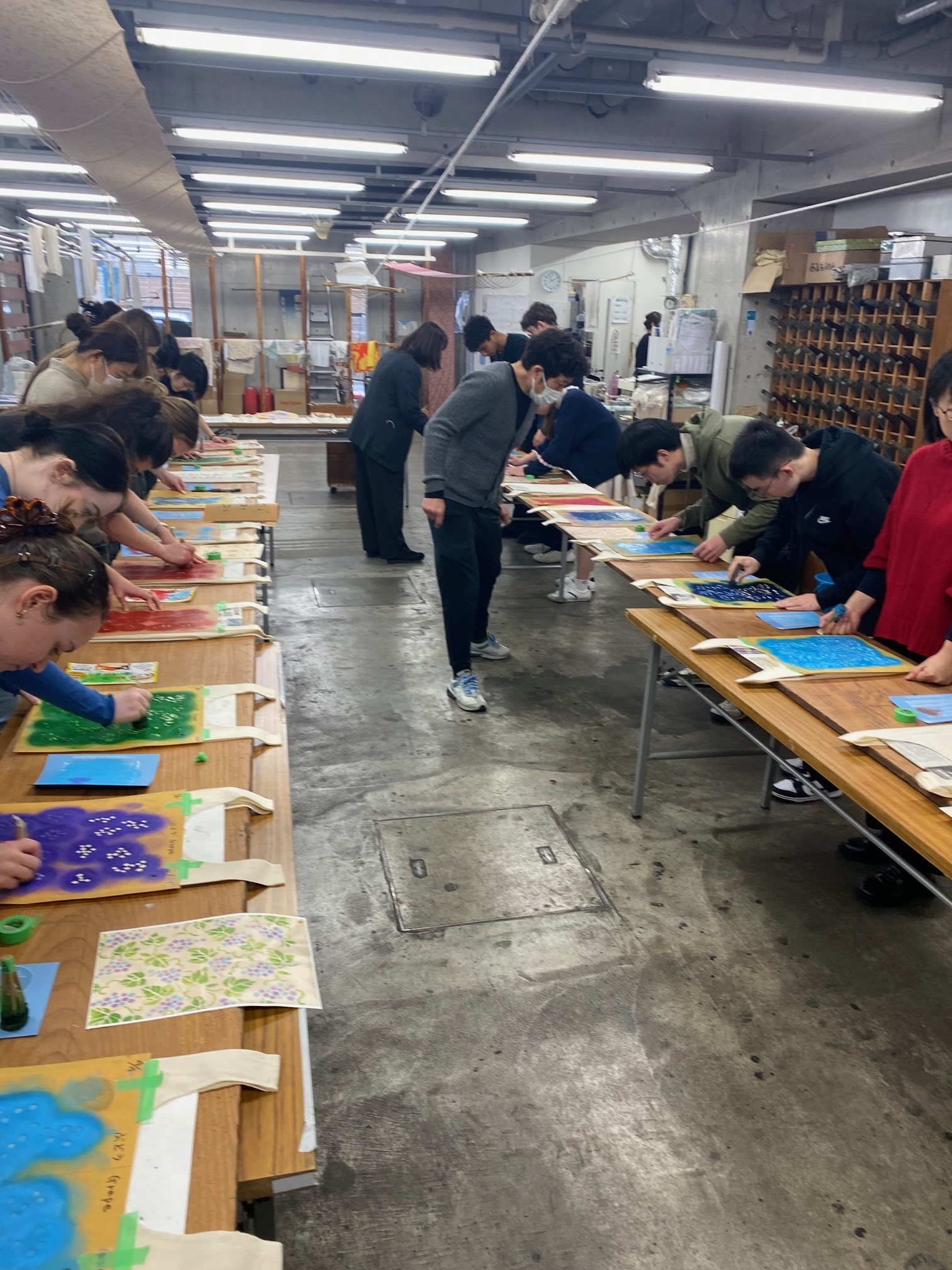
The choice of stencils revealed his/her personal taste.
It was very impressive that the students were carefully and meticulously creating their own works.
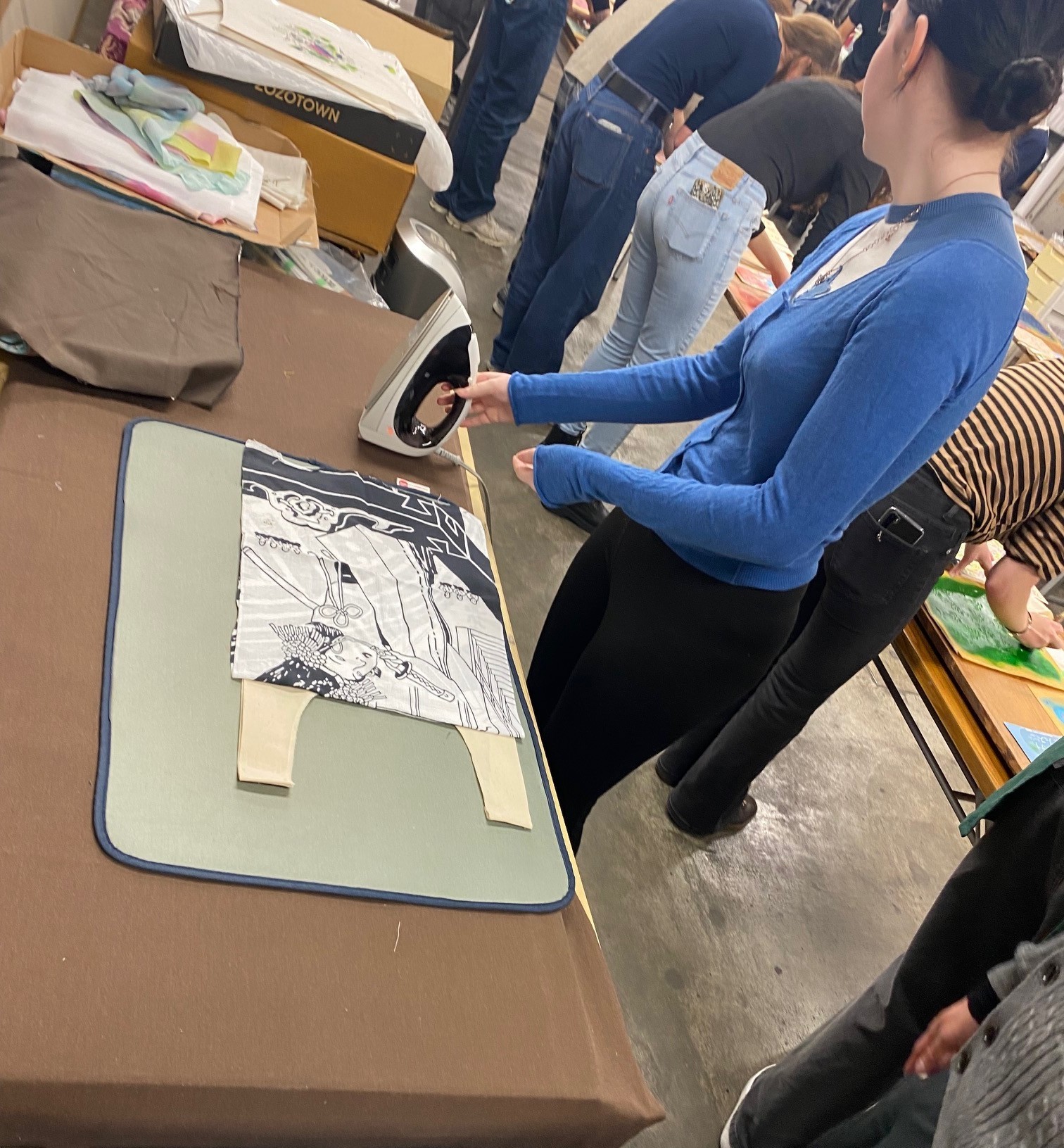
Then, they ironed dyed bags to fix colors.
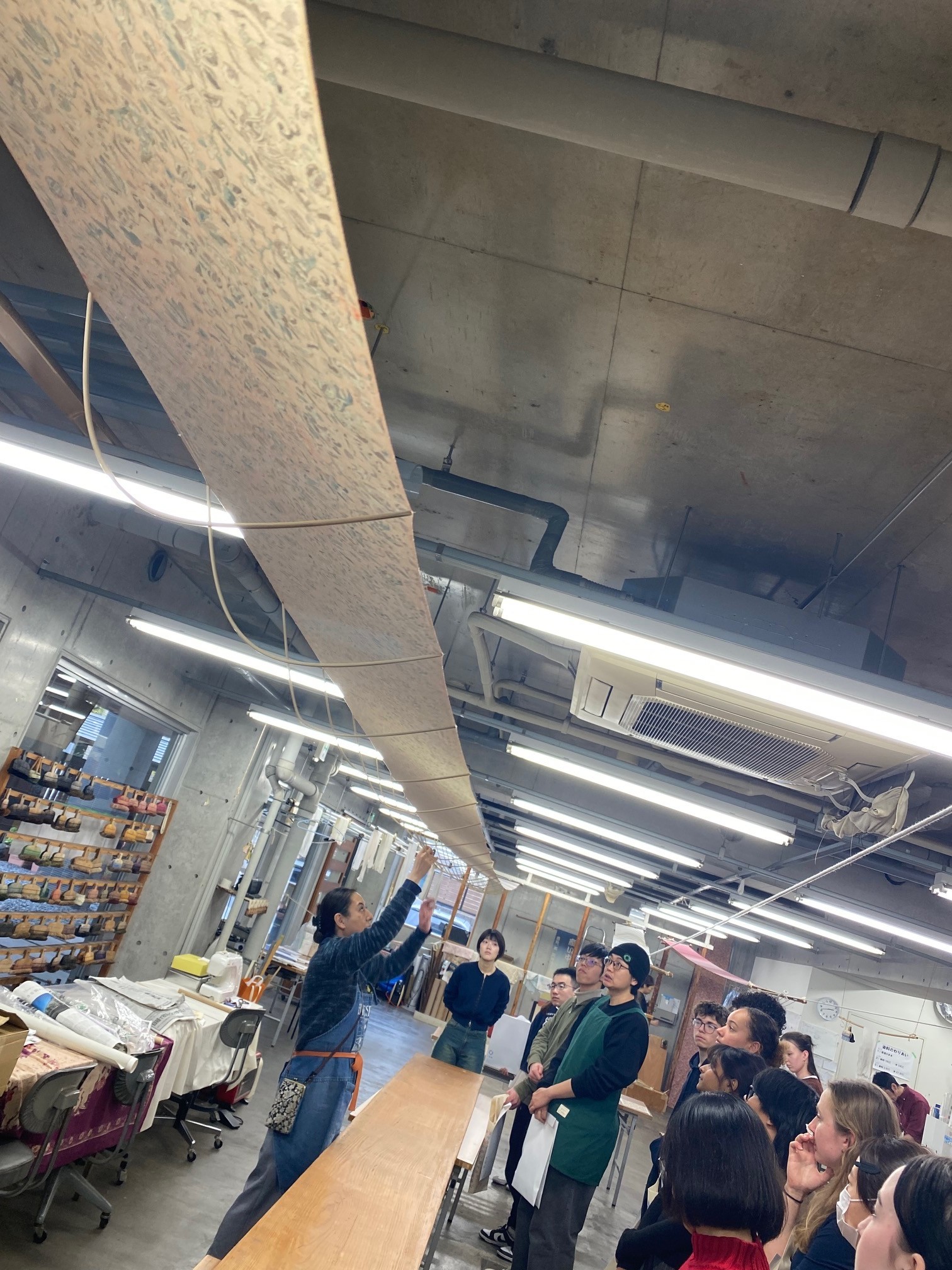
The students were also given a briefing on dyeing and a studio tour. According to the briefing, a roll of kimono fabric is about 12 meters long. A one-piece board that can accommodate such a long piece of cloth is very precious today. In dyeing an entire piece, a stencil needs to be repeatedly moved little by little to apply the pattern all over it. The students were attentively listening to the explanations.
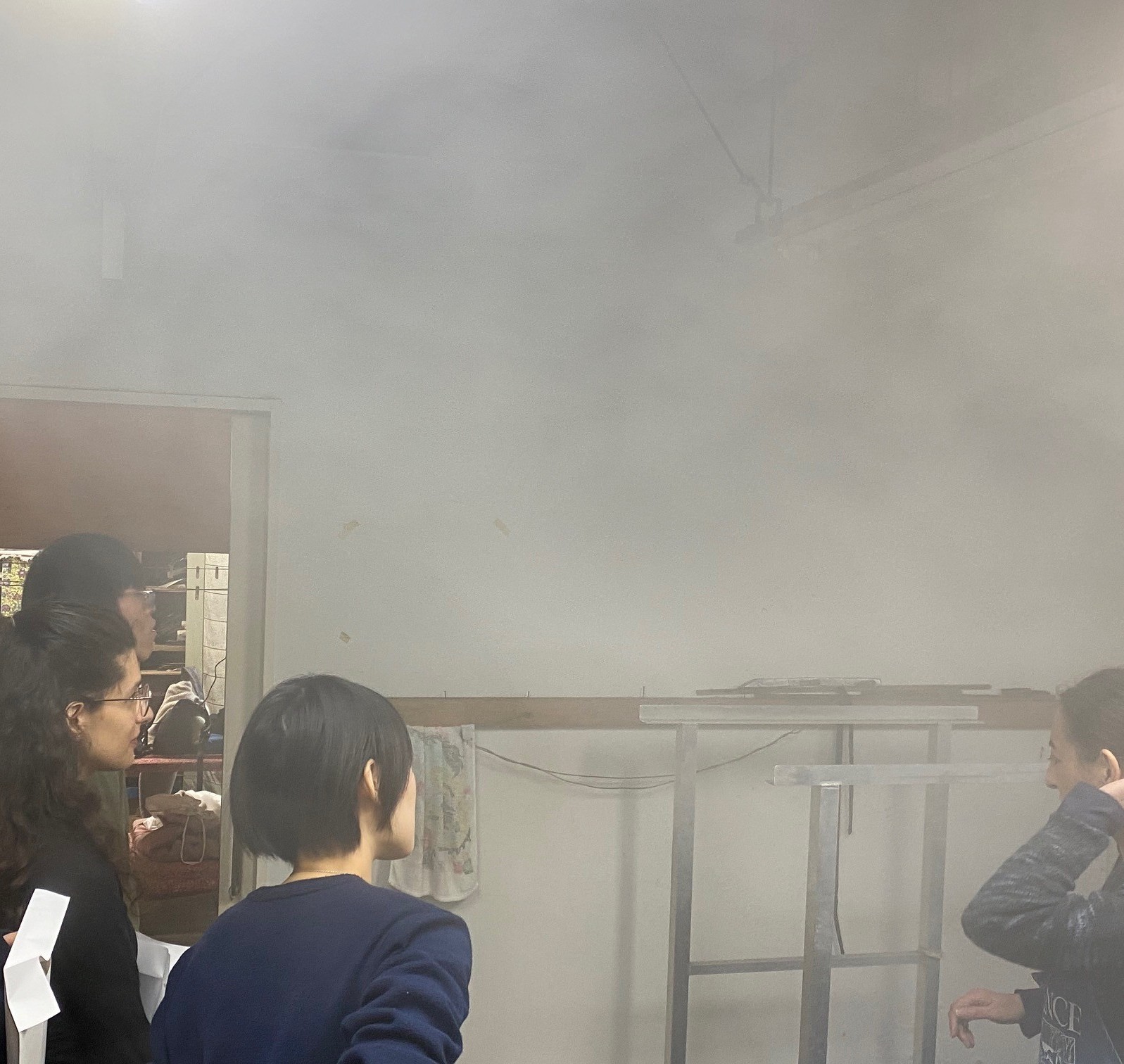
On the studio tour, they had a chance to see a long rectangular sink to wash a roll of fabric and a room to steam it for color fixing. For the workshop, electric irons were used to fix colors, but normally dyed fabrics go through the steaming process for color fixing.
Finished shopping bags are in many different colors!
"I never had a dyeing lesson before. I learned a lot." "I was able to experience an aspect of traditional Japanese culture. It was interesting and enjoyable!" These are comments from some of the participants.
In this district, an event is organized where colorful fabrics are hung over Myoshoji River to revive the traditional sight of washing fabrics in the river. It is certainly a quintessentially Japanese scene worth seeing someday.
It was a valuable experience for the students to experience the beauty and craftsmanship of Japanese dyeing culture.